
If you have ever leaked a little when laughing, sneezing, or jumping on a trampoline with your kids, you are not alone. Millions of women deal with pelvic floor weakness at some point in their lives, whether after pregnancy, during menopause, or simply from years of not knowing these muscles existed. The good news is that kegel exercises for women are one of the simplest and most effective ways to rebuild that strength from the inside out.
This guide walks you through everything you need to know about pelvic floor exercises: what they are, how to do them correctly, how many you actually need each day, and how they fit into different stages of a woman's life. No equipment needed. No gym required. Just a few minutes of focused attention that can make a real difference.
Whether you are a new mom recovering from delivery, a busy professional dealing with desk-job posture, or a woman in her 50s noticing changes you did not expect, this is for you. If you are a mom struggling to find time for yourself, this fits perfectly into a daily self-care routine that takes just minutes.
What Are Kegel Exercises?
Kegel exercises are named after Dr. Arnold Kegel, who developed them in the 1940s as a non-surgical way to strengthen the pelvic floor. According to the Office on Women's Health, the pelvic floor is a group of muscles that sit like a hammock at the base of your pelvis. These muscles support your bladder, uterus, and rectum, and they play a role in everything from urinary control to core stability.
Think of the pelvic floor as the foundation of a house. When it is strong, everything above it stays supported. When it weakens, things start to shift. You might notice leaking, a feeling of heaviness in the pelvis, lower back discomfort, or reduced sensation during intimacy.
The Mayo Clinic explains that women specifically need pelvic floor exercises because our bodies go through events that directly challenge these muscles: pregnancy, childbirth, hormonal shifts during menstruation and menopause, and even the effects of prolonged sitting. Unlike biceps or quads, these muscles are invisible, so weakness can go unnoticed for years until symptoms appear.
A kegel is essentially a squeeze-and-lift of the pelvic floor muscles, followed by a controlled release. That is it. No movement anyone can see, no special clothing, and nothing to buy. But the simplicity is also why many women do them incorrectly or give up before seeing results.
Benefits of Kegel Exercises for Women
Consistent pelvic floor strengthening exercises offer a range of benefits that go well beyond bladder control. Here is what regular practice can do:
- Improved bladder control: Kegel exercises are one of the first-line approaches for stress urinary incontinence, the type of leaking triggered by coughing, sneezing, laughing, or physical activity. Strengthening these muscles gives you better support around the urethra.
- Postpartum recovery: Pregnancy and vaginal delivery stretch the pelvic floor significantly. Kegel exercises after pregnancy help restore muscle tone, reduce post-delivery incontinence, and support your body as it heals. Many midwives encourage starting gentle kegels within days of an uncomplicated vaginal birth.
- Core and posture support: The pelvic floor works together with your deep abdominal muscles, diaphragm, and lower back muscles to form your inner core. When your pelvic floor is strong, your posture improves, and your back is better supported during daily activities. If you are working toward your ideal body weight, a strong core foundation makes movement easier and safer.
- Intimacy and confidence: Pelvic floor strength contributes to sensation and satisfaction during intimacy. Many women report that consistent kegel practice improves both physical sensation and personal confidence in this area.
- Menopause support: As estrogen levels decline during menopause, pelvic floor tissues can become thinner and weaker. Regular kegel exercises help maintain muscle tone and reduce the risk of prolapse and incontinence during this transition.
- Bowel health: The pelvic floor also supports rectal function. Strengthening these muscles can help with bowel regularity and reduce the sensation of incomplete emptying.
How to Do Kegel Exercises Correctly (Step-by-Step)
Getting the technique right is the single most important factor. Many women unknowingly squeeze their thighs, glutes, or abdomen instead of their pelvic floor. Here is how to find and engage the correct muscles:
Step 1: Find the Right Muscles
The easiest way to identify your pelvic floor muscles is to imagine you are trying to stop the flow of urine midstream. The muscles you feel tightening are your pelvic floor. Another way is to imagine you are trying to hold back gas in a public setting. That gentle squeeze and lift sensation is what you are looking for.
Important: Do not actually practice kegels while urinating. This can interfere with normal bladder emptying. Use the technique only to identify the muscles, then practice separately.
Step 2: Get Comfortable
When starting out, lie on your back with knees bent and feet flat on the floor. This position removes gravity from the equation, making it easier to isolate the pelvic floor. As you gain awareness and strength, you can progress to sitting or standing.
Step 3: Contract and Hold
Gently squeeze and lift your pelvic floor muscles. Imagine you are drawing them upward and inward, like an elevator rising inside your pelvis. Hold the contraction for 3 to 5 seconds. Keep breathing normally throughout. Do not hold your breath.
Step 4: Release Fully
Let the muscles relax completely for 3 to 5 seconds before the next repetition. The release is just as important as the squeeze. A pelvic floor that cannot fully relax can become tight and problematic.
Step 5: Repeat
Aim for 10 repetitions. This counts as one set. Rest for a minute, then do another set if you feel comfortable. Gradually increase the hold time to 10 seconds as your strength improves.
Breathing During Kegels
Breathe in through your nose as you prepare. Exhale gently as you engage the pelvic floor. Continue breathing normally throughout the hold. Holding your breath creates downward pressure, which works against the exercise.
Common Mistakes to Avoid
- Squeezing the wrong muscles: If your buttocks, inner thighs, or stomach tighten noticeably, you are using the wrong muscles. The movement should be subtle and internal.
- Bearing down instead of lifting: Some women push down instead of drawing up. If you feel a bulging sensation, you are pushing in the wrong direction.
- Forgetting to breathe: Holding your breath increases abdominal pressure. Breathe steadily.
- Rushing through repetitions: Slow, controlled contractions build more strength than fast, sloppy ones.
How Many Kegel Exercises Should Women Do Per Day?
More is not always better. Here is a sensible guideline for how many kegel exercises per day based on your experience level:
Beginners (Weeks 1-4)
- 3 sets of 10 repetitions per day
- Hold each contraction for 3-5 seconds
- Rest 3-5 seconds between repetitions
- Total daily time: about 5 minutes
Intermediate (Weeks 5-8)
- 3 sets of 10-15 repetitions per day
- Hold each contraction for 5-8 seconds
- Add quick-flick kegels: 10 rapid squeeze-and-release cycles per set
Advanced (Weeks 9+)
- 3 sets of 15 repetitions per day
- Hold each contraction for 10 seconds
- Practice in different positions: lying, sitting, standing
- Integrate kegels into daily activities (waiting in line, sitting at your desk)
A Word of Caution
Overdoing kegel exercises can lead to a hypertonic (overly tight) pelvic floor. Symptoms include pelvic pain, painful intimacy, difficulty emptying the bladder, and a feeling of constant tension. If you experience any of these, reduce your routine and consider consulting a pelvic floor physiotherapist. Balance is essential. Your muscles need rest to rebuild, just like any other muscle group.
7-Day Beginner Kegel Plan (Simple and Realistic)
If you are just starting, use this schedule instead of doing too much too soon:
- Days 1-2: 2 sets x 8 reps, hold 3 seconds, release 4 seconds
- Days 3-4: 3 sets x 8 reps, hold 3 to 4 seconds
- Days 5-6: 3 sets x 10 reps, hold 4 to 5 seconds
- Day 7: Light day: 2 sets x 8 reps with full relaxation focus
After week one, continue with 3 sets of 10 reps daily and increase hold times gradually.
7-Day Pelvic Floor Workout Plan (Free Download)
Want a printable version of this plan with daily checkboxes, progress tracker, and bonus week 2-4 progressions?
Join 500+ women who are strengthening their pelvic floor with our free plan. We will email it to you instantly.
No spam. Unsubscribe anytime. We respect your privacy.
Kegel Exercises for Different Life Stages
Your pelvic floor needs change throughout your life. Here is how to adapt your practice:
After Pregnancy and Childbirth
The pelvic floor undergoes significant stretching during pregnancy and delivery. Whether you had a vaginal birth or a cesarean section (yes, pregnancy itself affects the pelvic floor regardless of delivery method), rebuilding these muscles is a priority. Understanding your BMR changes during pregnancy and postpartum can also help you manage energy levels and recovery alongside your pelvic floor routine.
Most healthcare providers recommend starting gentle kegels within the first few days after an uncomplicated vaginal delivery. If you had a tear, episiotomy, or cesarean section, wait until you have clearance from your provider, typically around the 6-week postpartum check.
Start slowly. Your muscles may feel weak or hard to locate. That is completely normal. Begin with short holds (2-3 seconds) and build gradually. Pair your kegel routine with adequate hydration. Use our water intake calculator to find the right amount for your body, especially if you are breastfeeding.
During Menopause
Declining estrogen levels affect the elasticity and tone of pelvic floor tissues. Many women notice increased urgency, more frequent trips to the bathroom, or new episodes of leaking during this time. Kegels become especially important during perimenopause and beyond as a preventive measure.
If you are also managing stress during this transition, consider checking your stress levels. Chronic stress can create tension patterns in the pelvic floor that work against your strengthening efforts.
For Urinary Leakage
Stress incontinence is the most common type of leaking in women. It happens when physical pressure on the bladder exceeds the strength of the pelvic floor muscles. Kegel exercises directly address this by building the muscular support around the urethra.
For best results, practice "the knack": consciously squeeze your pelvic floor just before you cough, sneeze, lift something heavy, or do any activity that triggers leaking. This pre-contraction braces the muscles and reduces or prevents leakage in the moment.
For Desk-Job Women
Sitting for long hours weakens the pelvic floor over time. The muscles become underused and the surrounding hip muscles tighten. If you spend most of your day at a desk, building kegels into your work routine is both practical and beneficial.
Try doing one set every time you sit down after a break. No one will know you are doing them. Combine this with regular movement breaks and attention to your overall health. Knowing where you stand with your BMI can also help you understand how your body weight may be affecting your pelvic floor.
Common Mistakes Women Make With Kegels
Even women who have been doing kegels for years sometimes get them wrong. Here are the most frequent mistakes:
- Engaging the wrong muscles: Squeezing the buttocks, inner thighs, or abdomen instead of the pelvic floor. If you can see external movement, you are likely using the wrong group. The pelvic floor contraction is subtle and internal.
- Holding your breath: This increases intra-abdominal pressure and pushes down on the pelvic floor rather than lifting it. Always breathe normally through each repetition.
- Overtraining: Doing hundreds of kegels daily can fatigue the muscles and create tension rather than strength. Stick to the recommended sets and allow recovery time between sessions.
- Expecting instant results: Pelvic floor strengthening takes time. Like any exercise program, visible progress usually takes 4 to 8 weeks of consistent effort. Many women quit before reaching this point because they do not feel an immediate change.
- Skipping the release: A full, conscious relaxation between each squeeze is essential. Muscles that are always "on" become tight and dysfunctional. Train the release just as deliberately as the contraction.
- Only doing kegels when already leaking: Prevention is more effective than correction. Starting a kegel routine before symptoms develop helps maintain strength long-term.
When Should Women Avoid Kegel Exercises?
While kegels are safe for most women, there are situations where they may not be the right approach:
- Hypertonic pelvic floor: Some women have pelvic floor muscles that are already too tight rather than too weak. In this case, kegels can make symptoms worse. Signs of a tight pelvic floor include pelvic pain, pain during intimacy, difficulty fully emptying the bladder, and a constant feeling of pressure.
- Active pelvic infections or inflammation: If you are dealing with a urinary tract infection, vaginal infection, or any pelvic inflammation, wait until the issue resolves before resuming exercises.
- Recently placed urinary catheter: Follow your healthcare provider's specific instructions about when to restart pelvic floor exercises after catheterization.
- Unexplained pelvic pain: If kegels consistently cause pain rather than a gentle sensation of effort, stop and consult a healthcare professional. Pain is not part of the process.
A pelvic floor physiotherapist can assess whether your muscles are weak, tight, or a combination of both, and create a targeted plan. This is not a medical diagnosis but a functional assessment that many women find genuinely helpful.
Kegels vs Other Pelvic Floor Exercises
Kegels are the foundation of pelvic floor training, but they are not the only option. Here is how they compare to other approaches:
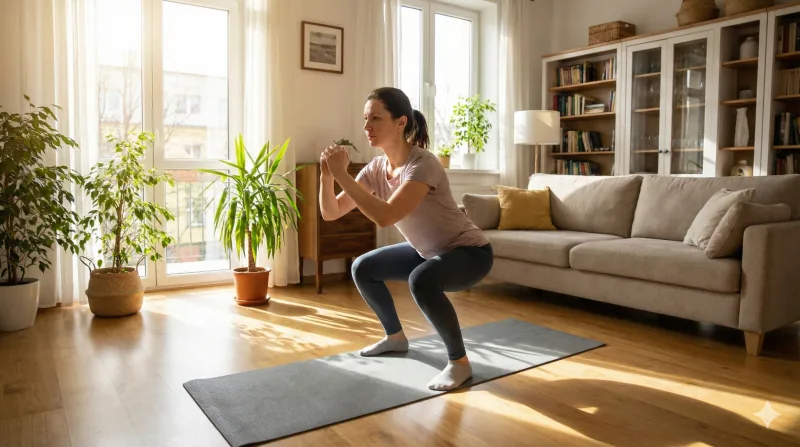
- Squats: Deep squats engage the pelvic floor along with the glutes and thighs. They are a functional exercise that strengthens the pelvic floor in a weight-bearing position. However, squats alone are not specific enough to isolate weaker areas of the pelvic floor.
- Bridge exercises: Glute bridges with a pelvic floor squeeze combine hip strength with pelvic floor activation. They are a great progression once you have mastered basic kegels.
- Pelvic floor physiotherapy: A trained therapist uses internal and external assessment to identify exactly where your weaknesses are and designs a targeted program. This is especially valuable for women with complex symptoms or those who are not seeing results from self-guided practice.
- Weighted pelvic floor trainers: These devices provide resistance for the pelvic floor, similar to using dumbbells for your arms. They can be effective but are best used after you have learned correct technique through standard kegels.
Think of kegels as the equivalent of learning to walk before you run. They teach you awareness and control of your pelvic floor, which makes every other exercise more effective. If your overall wellness is a priority, consider how sleep quality, stress, and hydration also affect your muscles. Poor sleep, for instance, interferes with muscle recovery. Our guide on the best magnesium supplements for sleep covers a mineral that supports both relaxation and muscle function.
Recommended Kegel Exercise Tools
While you can do kegel exercises with zero equipment, some women find that tools help with motivation, tracking progress, and adding resistance as they get stronger. Here are the most popular options:
1. Kegel Exercise Weights (Pelvic Floor Trainers)
Small weighted devices that you insert and hold using your pelvic floor muscles. They come in progressive weight sets so you can gradually increase resistance, similar to using dumbbells for your arms. Best for women who have mastered basic kegels and want faster results.
Popular options: Intimate Rose Kegel Exercise Weights, Elvie Trainer
2. Smart Kegel Trainers with App
Bluetooth-connected devices that pair with a smartphone app to give you real-time biofeedback during exercises. The app shows you exactly how strong your contractions are and guides you through workouts. Ideal for women who need visual feedback to know if they are squeezing correctly.
Popular options: Elvie Trainer, Perifit Kegel Exerciser
3. Pelvic Floor Exercise Balls (Ben Wa Balls)
Lightweight balls that provide gentle resistance. A good starting point for beginners who want something simple and affordable. They help you build awareness of the pelvic floor muscles before moving to heavier weights.
4. Yoga Mat and Resistance Bands
For women combining kegels with bridge exercises, squats, and other pelvic floor-supportive movements. A non-slip yoga mat and light resistance bands are all you need to build a complete at-home pelvic floor routine. These also work well for a beginner fitness program at home.
Do you need tools? No. Kegel exercises are effective without any equipment. Tools are optional add-ons for women who want faster progress, better feedback, or added motivation. Always master the basic technique first before introducing resistance devices.
Frequently Asked Questions
How to do kegel exercise for women correctly?
First find the right pelvic floor muscles, then do controlled squeeze-and-lift contractions for 3 to 5 seconds followed by full release for 3 to 5 seconds. Keep breathing and avoid tightening your thighs, glutes, or abs.
How long does it take to see results from kegel exercises?
Most women begin noticing improvements in bladder control and pelvic floor awareness within 4 to 6 weeks of daily practice. Significant strength gains typically take 8 to 12 weeks. Postpartum women may need a bit longer depending on delivery type and recovery. Consistency matters more than intensity.
How many kegel exercises should a woman do per day?
A practical starting point is 3 sets of 10 repetitions daily, holding each contraction 3 to 5 seconds. Build gradually over several weeks instead of doing very high reps too early.
Can teenagers do kegel exercises?
Kegel exercises are generally safe for teenagers. Building pelvic floor awareness early can support long-term health. However, teens rarely need intensive pelvic floor training unless they have a specific concern like stress incontinence during sports. If a teen is experiencing pelvic floor issues, consulting a healthcare provider is a good first step.
Are kegel exercises safe during pregnancy?
Kegel exercises are generally considered safe during pregnancy and are often encouraged by healthcare providers. Strengthening the pelvic floor during pregnancy may help support the growing uterus, reduce urinary leakage, and prepare the body for delivery. Always check with your midwife or doctor before starting any new exercise routine during pregnancy.
Can kegel exercises help flatten your belly?
Kegel exercises specifically target the pelvic floor muscles, not the abdominal muscles. They will not directly flatten your belly. However, a strong pelvic floor supports better posture and core stability, which can contribute to a more toned appearance over time. For abdominal toning, combine kegels with core-focused exercises like those in our guide on how to lose lower belly fat. You can also find your ideal weight based on your age and height to set realistic goals.
Can kegel exercises help with bladder leaks?
Yes, kegel exercises are one of the most effective non-surgical approaches for managing stress urinary incontinence, the type of leaking that happens when you cough, sneeze, laugh, or exercise. By strengthening the muscles that support the bladder and urethra, kegels help you regain control. Many women see noticeable improvement within 6 to 8 weeks of consistent practice.
How do you know if kegel exercises are working?
After 4 to 6 weeks of consistent daily practice, most women notice fewer episodes of leaking, better ability to hold urine when the urge strikes, and a stronger sense of control during activities like coughing or jumping. You may also notice improved sensation during intimacy. If you can hold a contraction for 10 seconds without fatigue when you previously could only manage 3 seconds, that is measurable progress.
Can you do kegel exercises while sitting at your desk?
Yes, and this is one of the best things about kegels. No one can see you doing them. You can practice while sitting at your desk, waiting in line, driving, or watching TV. Sitting upright in a chair with feet flat on the floor is actually a great position for kegels once you have learned the correct technique lying down. Many women build kegels into their work routine by doing one set every hour.
Do kegel exercises help after menopause?
Absolutely. Menopause causes a decline in estrogen, which weakens pelvic floor tissues. Regular kegel exercises help maintain muscle tone, reduce the risk of pelvic organ prolapse, and manage urinary urgency and leaking that often worsens after menopause. It is never too late to start. Women in their 60s and 70s still see benefits from consistent practice.
Disclaimer: This article is for informational and educational purposes only. It does not constitute medical advice. Pelvic floor concerns vary widely from person to person. If you are experiencing pain, persistent incontinence, or other symptoms that affect your quality of life, please consult a qualified healthcare professional or pelvic floor physiotherapist for personalized guidance.