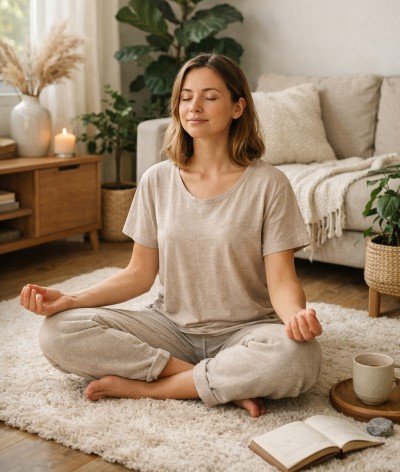
When anxiety takes hold, your mind races with worries about the future. Mindfulness, endorsed by the National Institute of Mental Health, offers a powerful antidote by anchoring you firmly in the present moment�the only moment where peace actually exists.
These simple mindfulness exercises for anxiety can be practiced anywhere, anytime, requiring no special equipment.
1. The 5-4-3-2-1 Grounding Technique
This exercise, recommended by the American Psychological Association, uses your senses to bring you back to the present moment. It's especially helpful during anxiety attacks.
How to Practice:
- 5 things you can SEE: Look around and name five things
- 4 things you can TOUCH: Feel the texture of your clothes, the chair beneath you
- 3 things you can HEAR: Listen for sounds in your environment
- 2 things you can SMELL: Notice any scents around you
- 1 thing you can TASTE: Notice the taste in your mouth
2. Box Breathing
Used by Navy SEALs for stress management, this technique calms the nervous system quickly.
How to Practice:
- Inhale slowly for 4 counts
- Hold your breath for 4 counts
- Exhale slowly for 4 counts
- Hold empty for 4 counts
- Repeat 4-6 times
3. Body Scan Meditation
This practice helps release physical tension that accompanies anxiety.
How to Practice:
- Lie down or sit comfortably
- Close your eyes and take three deep breaths
- Starting at your feet, notice any sensations
- Slowly move your attention up through your body
- When you find tension, breathe into that area and release
- Continue until you reach the top of your head
4. Mindful Walking
Transform a simple walk into a calming mindfulness practice.
How to Practice:
- Walk at a slower pace than usual
- Feel each foot as it touches the ground
- Notice the sensation of movement in your legs
- Observe your surroundings without judgment
- When your mind wanders, gently return focus to walking
5. STOP Technique
A quick mindfulness tool for anxious moments:
- S - Stop what you're doing
- T - Take a breath
- O - Observe your thoughts and feelings without judgment
- P - Proceed with awareness
6. Mindful Breathing
The simplest yet most powerful mindfulness practice.
How to Practice:
- Find a comfortable position
- Focus attention on your breath
- Notice the sensation of air entering and leaving
- Don't try to change your breathing�just observe
- When thoughts arise, acknowledge them and return to breath
- Start with 5 minutes, gradually increase
7. Loving-Kindness Meditation
This practice reduces anxiety by cultivating feelings of compassion.
How to Practice:
- Sit comfortably and close your eyes
- Think of yourself and silently repeat: "May I be happy. May I be healthy. May I be at peace."
- Extend these wishes to someone you love
- Then to a neutral person
- Finally, to all beings everywhere
Tips for Success
- Start small: 5 minutes daily is better than 30 minutes once a week
- Be patient: Mindfulness is a skill that improves with practice
- Don't judge: A wandering mind is normal�gently redirect
- Use reminders: Set phone alerts for mindfulness breaks
- Try apps: Guided meditations can help beginners
Remember: Mindfulness isn't about emptying your mind or achieving a special state. It's simply about being present with whatever is happening right now, with kindness and without judgment.
Frequently Asked Questions
Mindfulness activates the parasympathetic nervous system, reducing cortisol and stress hormones. It trains the brain to focus on the present rather than worrying about the future.
Even 5-10 minutes daily can reduce anxiety. Consistency matters more than duration. Start small and gradually increase.
Mindfulness is effective but shouldn't replace prescribed medication without consulting your doctor. It works best as part of a comprehensive approach.