You plug your height into an ideal weight calculator and get a number. But should you really weigh 127 pounds just because a formula says so? The truth is that ideal weight is highly individual. Your height is just one piece of a much larger puzzle.
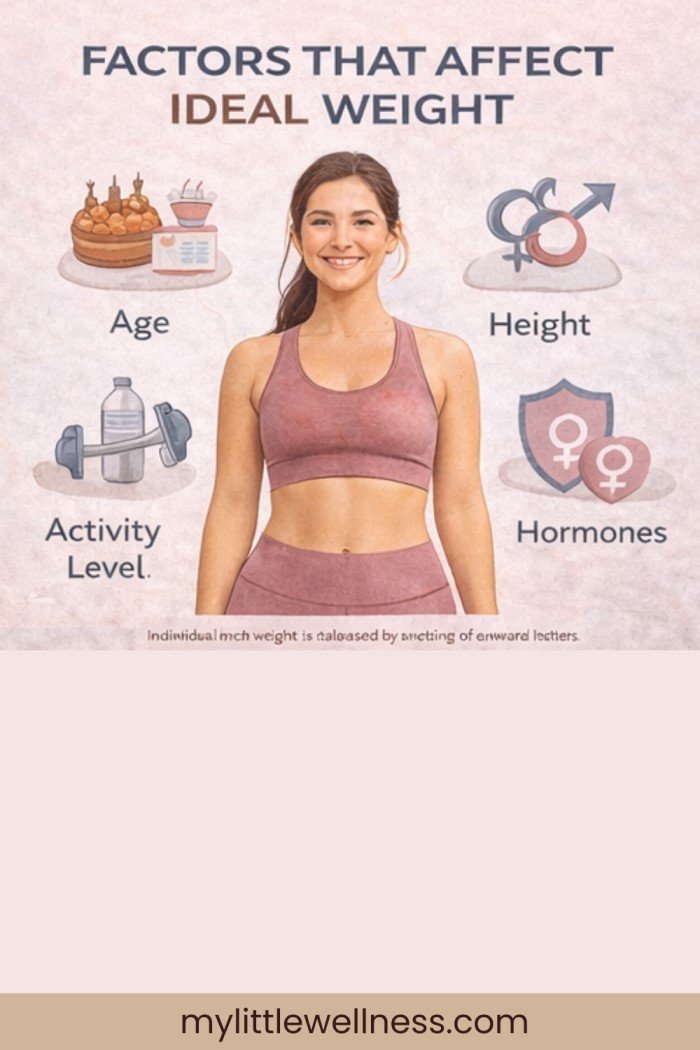
This guide explores the seven key factors that affect what weight is actually healthy for your body. Understanding these factors helps you set realistic goals and interpret calculator results with appropriate nuance.
1. Body Frame Size
Your bone structure plays a significant role in determining healthy weight. Someone with a large frame naturally weighs more than someone with a small frame at the same height - and both can be perfectly healthy.
How to Determine Your Frame Size
The simplest method is the wrist test:
- Wrap your thumb and middle finger around your wrist at its narrowest point
- Small frame: Fingers overlap
- Medium frame: Fingers just touch
- Large frame: Fingers do not touch
How Frame Affects Ideal Weight
Frame size can shift your ideal weight by 10-15%:
| Height | Small Frame | Medium Frame | Large Frame |
|---|---|---|---|
| 5'4" | 109-119 lbs | 116-131 lbs | 127-145 lbs |
| 5'6" | 115-126 lbs | 123-139 lbs | 135-154 lbs |
| 5'8" | 122-134 lbs | 131-147 lbs | 143-163 lbs |
Most ideal weight formulas assume a medium frame. If you have a small frame, aim for the lower end of any recommended range. Large frame? The higher end is appropriate for you.
2. Age
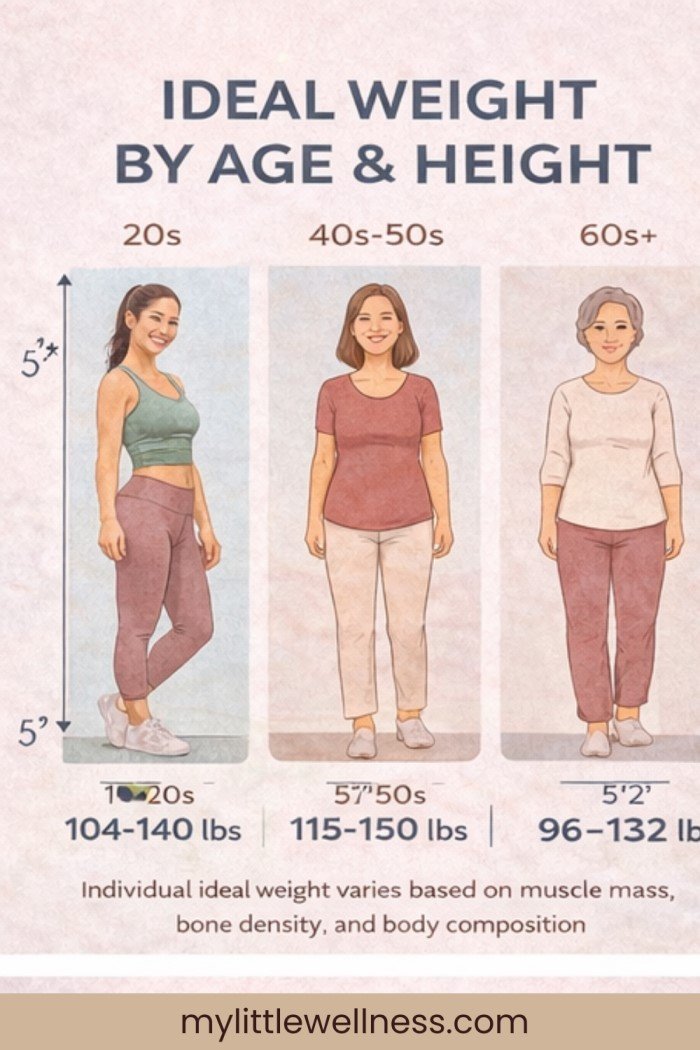
Your ideal weight is not static throughout life. As you age, both your body composition and what constitutes "healthy" weight naturally shifts.
In Your 20s and 30s
Standard ideal weight formulas work best for this age group. Metabolism is at its peak, and you can typically maintain a lower weight without difficulty.
In Your 40s
Metabolism begins slowing more noticeably. Muscle mass may decrease without regular strength training. Many women notice weight settling around the midsection due to hormonal changes approaching menopause.
In Your 50s and Beyond
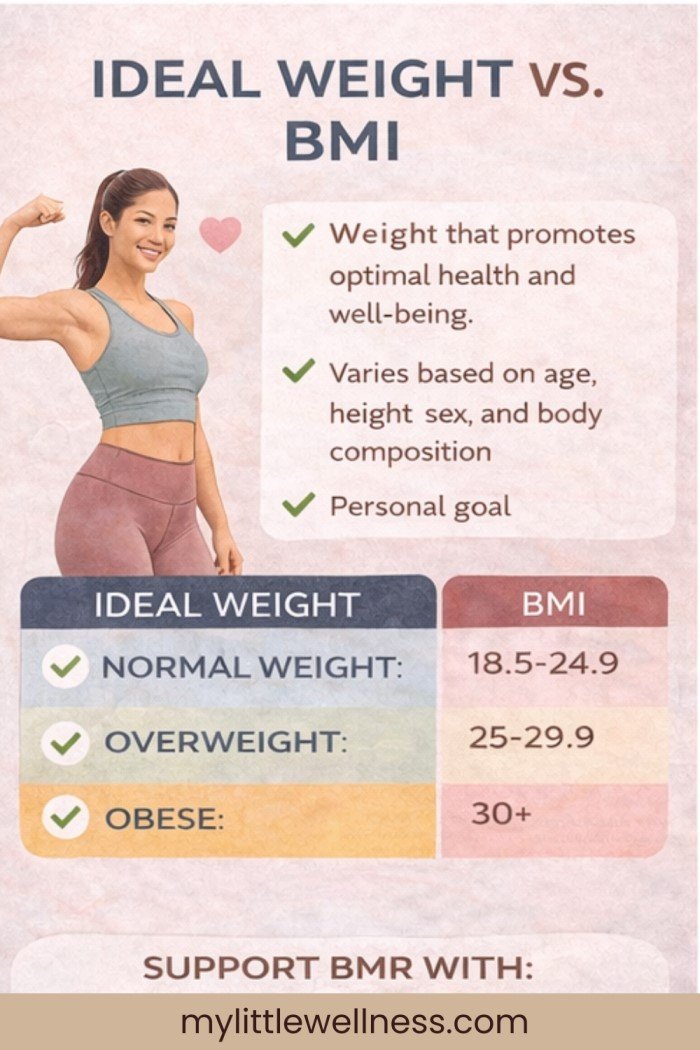
Research suggests that slightly higher weights may actually be protective for older adults. The "obesity paradox" shows that BMIs of 23-27 (rather than 18.5-24.9) are associated with better health outcomes and longevity in those over 65.
This does not mean weight does not matter in older age - it means the target shifts. See our guide on ideal weight for women by age for specific recommendations.
3. Muscle Mass and Body Composition
Muscle weighs more than fat by volume. Two women of the same height can weigh the same but look completely different - and have very different health profiles.
Why Muscle Matters
- Metabolic health: Muscle burns more calories at rest than fat, boosting your BMR
- Appearance: The "toned" look comes from muscle; fat alone creates a soft appearance
- Function: Muscle supports mobility, balance, and independence as you age
- Health markers: Higher muscle mass is associated with better blood sugar control and cardiovascular health
When Calculators Miss the Mark
Ideal weight formulas and BMI do not distinguish between muscle and fat. This is why:
- Athletes may be classified as "overweight" while having excellent health
- "Skinny fat" individuals may be at "ideal weight" but have poor metabolic health
- Women who strength train may weigh more than formulas suggest while looking leaner
Body fat percentage is a better metric if you exercise regularly. For women:
| Category | Body Fat % |
|---|---|
| Essential fat | 10-13% |
| Athletes | 14-20% |
| Fitness | 21-24% |
| Acceptable | 25-31% |
| Obesity | 32%+ |
Estimate yours with our Body Fat Calculator.
4. Genetics
Your genes influence your natural weight set point, fat distribution, metabolism, and how your body responds to diet and exercise.
What Genetics Control
- Set point weight: The weight range your body naturally gravitates toward
- Fat distribution: Whether you store fat in hips/thighs (pear shape) or abdomen (apple shape)
- Metabolic rate: How many calories you burn at rest
- Appetite signals: How hungry you feel and how quickly you feel full
- Response to exercise: How easily you build muscle and lose fat
Genetics Are Not Destiny
While you cannot change your genes, lifestyle factors still have enormous influence. Studies of identical twins show that even with identical DNA, weight can differ significantly based on habits. Genetics may make weight management easier or harder, but they do not make it impossible.
Family History as a Guide
Look at your biological family members. If most women in your family are naturally heavier or lighter than average, you may have a genetic tendency in that direction. This does not mean you will match their weight exactly, but it provides context for what might be realistic for your body.
5. Ethnicity
Standard ideal weight formulas and BMI cutoffs were developed primarily using data from white populations. Research shows that health risks associated with weight occur at different thresholds for different ethnic groups.
Asian Populations
Studies suggest that Asian populations face elevated health risks (diabetes, cardiovascular disease) at lower BMIs than white populations. The World Health Organization has proposed lower BMI cutoffs for Asians:
- Overweight: BMI 23+ (vs. 25+ standard)
- Obese: BMI 27.5+ (vs. 30+ standard)
This means ideal weight for Asian women may be somewhat lower than standard formulas suggest.
Black Populations
Research indicates that Black women may be metabolically healthier at higher weights than white women. Some studies suggest that standard BMI overestimates health risk in Black populations, though this remains an area of ongoing research.
Hispanic Populations
Hispanic populations show varied patterns, with some subgroups facing higher diabetes risk at lower BMIs and others showing protective factors at higher weights.
Key takeaway: Standard formulas provide a starting point, but your ethnic background may mean your true healthy weight differs from what calculators suggest.
6. Hormones
Hormones regulate nearly every aspect of metabolism, fat storage, muscle maintenance, and appetite. When hormones are disrupted, maintaining a healthy weight becomes significantly more challenging.
Key Hormones Affecting Weight
Thyroid Hormones
Your thyroid controls your metabolic rate. Hypothyroidism (underactive thyroid) slows metabolism and can cause weight gain even without dietary changes. Hyperthyroidism speeds metabolism and can cause unexplained weight loss. Get your thyroid checked if you experience unexplained weight changes.
Estrogen and Progesterone
These reproductive hormones influence where fat is stored and can cause monthly weight fluctuations of 2-5 pounds due to water retention. During perimenopause and menopause, declining estrogen often leads to weight redistribution from hips to abdomen.
Cortisol
The stress hormone cortisol promotes fat storage, particularly around the midsection. Chronic stress keeps cortisol elevated, making weight loss difficult and weight gain easy. Managing stress is often an overlooked aspect of weight management.
Insulin
Insulin resistance (often associated with PCOS and prediabetes) makes weight loss difficult because your body struggles to use glucose properly and tends to store more fat. Conditions like PCOS can make achieving "ideal weight" more challenging.
Medical Conditions Affecting Weight
- PCOS: Affects 10% of women; often causes weight gain and difficulty losing weight
- Hypothyroidism: Slows metabolism
- Cushing's syndrome: Elevated cortisol causes weight gain
- Insulin resistance/Type 2 diabetes: Affects how body processes and stores energy
If you suspect a hormonal issue, work with your healthcare provider. Addressing the underlying condition often makes weight management more achievable.
7. Medical History and Medications
Your health history and current medications can significantly affect your weight and what is achievable.
Medications That Affect Weight
Many common medications can cause weight gain as a side effect:
- Antidepressants: Particularly SSRIs and tricyclics
- Antipsychotics: Can cause significant weight gain
- Beta-blockers: Used for heart conditions and blood pressure
- Corticosteroids: Like prednisone
- Diabetes medications: Insulin and some oral medications
- Birth control: Some formulations cause fluid retention or appetite changes
- Antihistamines: Some can increase appetite
If you are taking medications that cause weight gain, your "achievable ideal weight" may be higher than formula-based calculations. Discuss options with your doctor - sometimes alternative medications with fewer weight effects exist.
Previous Weight History
Your weight history also matters:
- Yo-yo dieting: Repeated cycles of weight loss and regain can slow metabolism over time
- Childhood obesity: May create more fat cells that persist into adulthood
- Long-term overweight: Your body's set point may have shifted higher
Putting It All Together
So how do you determine your actual ideal weight given all these factors? Here is a practical approach:
- Calculate the baseline: Use our Ideal Weight Calculator to see what standard formulas suggest
- Adjust for frame: Add 10% for large frame, subtract 10% for small frame
- Consider age: Accept that slightly higher weights may be healthier as you age
- Factor in muscle: If you strength train regularly, expect to weigh more than formulas suggest
- Acknowledge limitations: Medical conditions, medications, and genetics may shift your achievable range
- Verify with other metrics: Check that your target gives a healthy BMI, waist under 35 inches, and healthy body fat percentage
- Focus on health markers: Blood pressure, blood sugar, cholesterol, and energy levels matter more than matching a formula
When to Prioritise Health Over Weight
Sometimes chasing a lower number on the scale is counterproductive. Focus on health rather than weight if:
- You have excellent health markers (blood pressure, blood sugar, cholesterol) at your current weight
- You are active, strong, and functional
- Previous attempts at significant weight loss have failed repeatedly
- Pursuing a lower weight requires extreme restriction that harms quality of life
- You have a history of disordered eating
Being somewhat above "ideal weight" with excellent health markers is better than being at ideal weight with poor health habits.
Disclaimer: This article is for informational purposes only and does not constitute medical advice. Ideal weight varies by individual. Consult a healthcare professional for personalised guidance.
Frequently Asked Questions
Does body frame really affect ideal weight?
Yes. Body frame accounts for bone structure and natural width. Large-framed individuals can weigh 10-15% more than small-framed people of the same height while being equally healthy. You can determine your frame size using the wrist measurement test.
Why does my ideal weight change as I get older?
Metabolism slows with age, muscle mass naturally decreases, and hormonal changes affect fat distribution. Research also suggests that slightly higher weights may be protective in older adults. A BMI of 23-27 may be healthier for those over 65 than the standard 18.5-24.9.
Can two people of the same height have different ideal weights?
Absolutely. Two 5'5" women could have healthy weights ranging from 115 to 150 pounds depending on their frame size, muscle mass, age, and genetics. This is why ideal weight is better thought of as a range than a single number.
How do hormones affect ideal weight?
Hormones like estrogen, progesterone, thyroid hormones, cortisol, and insulin all influence metabolism, fat storage, and muscle mass. Conditions like PCOS, hypothyroidism, and menopause can make weight management more challenging and shift what weight is realistic.
Should athletes use standard ideal weight formulas?
Not necessarily. Athletes often carry more muscle mass, which weighs more than fat. A muscular woman may exceed formula-based ideal weights while having an excellent body composition and health markers. Body fat percentage is a better metric for athletes.