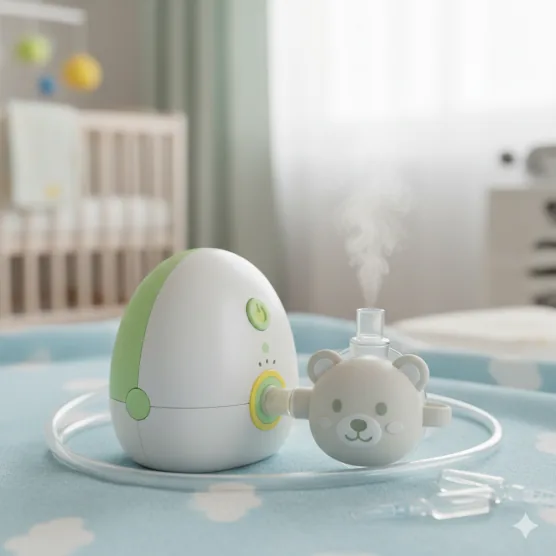
When your pediatrician diagnoses your baby with wheezing, bronchiolitis, or infant asthma, the CDC notes they will likely prescribe a rescue medication like Albuterol. But then comes the choice of delivery: Should you use a nebulizer machine or an inhaler with a spacer?
Historically, the nebulizer was the "gold standard" for infants. However, according to the American Academy of Pediatrics, modern pediatric guidelines have shifted significantly. Many doctors now actually prefer the inhaler and spacer combination. In this guide, we'll explain why and help you understand which is best for your situation.
At a Glance: Nebulizer vs. Inhaler + Spacer
| Feature | Nebulizer | Inhaler + Spacer |
|---|---|---|
| Time Required | 10 - 15 minutes | 30 - 60 seconds |
| Portability | Bulky, needs power | Very portable, fits in bag |
| Delivery | Passive (Tidal breathing) | Targeted (Pulses) |
| Coordination | None needed | None needed (with valve) |
| Cost | Initial machine cost ($$) | Lower cost ($) |
1. The Nebulizer (The "Jet" Method)
A nebulizer uses compressed air to change liquid medication into a fine mist. The baby wears a mask and simply breathes normally for several minutes.
Pros:
- Easy for uncooperative babies: If your baby is sleeping or fighting, you can sometimes "blow" the mist near them (though a mask is better).
- No technique required: The baby just needs to breathe.
Cons:
- Loud and scary: The compressor noise can frighten infants.
- Inconsistent delivery: Much of the medicine is lost to the air while the baby exhales or if the mask isn't tight.
- Long duration: Sitting still for 15 minutes with a mask is hard for a toddler.
2. Inhaler + Spacer (The Modern Choice)
An MDI (Metered-Dose Inhaler) used with a spacerâ€â€like an OptiChamber or AeroChamberâ€â€is a tube that holds the medicine in the air so the baby can take 5-6 deep breaths to inhale it.
Pros:
- Speed: The entire treatment is over in less than a minute.
- Better lung deposition: Studies show more medicine reaches the lower airways compared to a nebulizer.
- Fewer side effects: Since it's targeted, babies often experience less of the "jitters" associated with Albuterol.
- Silent: No loud motors.
Cons:
- Mask Seal is Critical: If there is even a small gap between the mask and face, the medicine won't be inhaled.
Why Speed Matters for Babies
When a baby is struggling to breathe, they are already tired. A 15-minute nebulizer session requires them to work harder to breathe against the resistance of the mask and mist. An inhaler treatment is "one and done," allowing the baby to return to resting and recovering much faster.
"But my baby cries!" (The Silver Lining)
Many parents worry that the treatment won't work if the baby is crying while the mask is on. Pediatricians have a surprising secret: Crying actually helps. When a baby cries, they take deep, gasping breaths. These deep inhalations pull the medicine much further into the lungs than shallow, resting breaths would.
Conclusion: Which should you choose?
If your doctor gives you the choice, the Inhaler + Spacer is generally the better option for lifestyle, speed, and effectiveness. However, if your baby has very severe asthma or requires a specific medication that only comes in liquid form, a Nebulizer remains an essential tool.
For a complete overview of nebulizer safety, medicines, side effects, and age-by-age guidelines, read our complete nebulizer guide for infants & babies.
Cost, Convenience, and Adherence Comparison
| Factor | Nebulizer | Inhaler + Spacer |
|---|---|---|
| Treatment time | Longer sessions | Usually under one minute |
| Portability | Lower | High |
| Cleaning complexity | Higher | Moderate |
| Family adherence | Can be difficult on busy days | Usually easier to maintain |
Decision Checklist for Follow-Up Visits
- Ask which device best fits your baby's diagnosis today.
- Confirm exact technique and dose frequency in writing.
- Clarify what signs mean treatment is failing.
- Review cleaning protocol and replacement schedule.
Technique Audit Parents Can Do at Home
- Check mask seal from all sides before each dose.
- Keep baby upright to improve lower-airway delivery.
- Count completed inhalation breaths for spacer sessions.
- Re-check equipment condition weekly for cracks or leaks.
When Device Choice Should Be Re-Evaluated
If symptoms keep recurring, treatment is poorly tolerated, or adherence is dropping due to session length, ask your pediatrician whether switching device strategy can improve outcomes.
Practical Rule for Parents
Whichever device your clinician prescribes, the best option is the one your family can deliver correctly and consistently every time. Correct technique and adherence usually matter more than preference debates between devices.