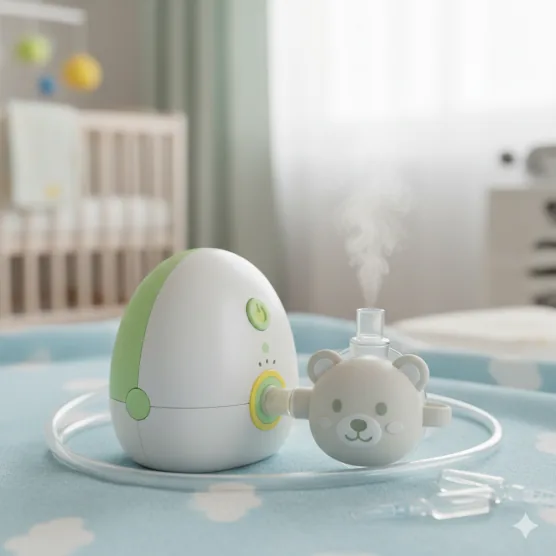
It starts with a simple sneeze. Then a runny nose. By evening, your baby sounds "rattly" when they breathe. As a parent, your mind immediately goes to the worst-case scenario: Is it RSV? Is it Bronchiolitis?
While many respiratory issues in babies look similar, there are subtle clues that can help you distinguish between a common cold and something that requires a trip to the ER. This guide will help you triage your baby's symptoms effectively.
Comparison Tool: Understanding the Difference
| Symptom | Common Cold | RSV / Bronchiolitis |
|---|---|---|
| Mucus | Runny nose (Clear to Yellow) | THICK, heavy mucus |
| Cough | Occasional/Dry | Wet, frequent, "deep" |
| Wheezing | Rare | Common (Whistling sound) |
| Feeding | Mostly Normal | Difficult (due to breathing) |
| Fever | Low or None | Can be High & Persistent |
What is RSV (Respiratory Syncytial Virus)?
The CDC reports that RSV is a very common virus that affects almost all children by age 2. In adults, it feels like a bad flu. But in babies, especially those under 6 months, it can cause the small airways in the lungs to swell and fill with mucus (this is called Bronchiolitis).
"The Red Zone": When to Call 911 or Go to the ER
The American Academy of Pediatrics warns that regardless of what virus is causing the illness, you must seek immediate help if you see these "Red Zone" signs:
- Retractions: The skin pulls in between the ribs, above the collarbone, or at the base of the throat with every breath.
- Nasal Flaring: The nostrils widen significantly with every breath.
- Color Change: A blue or grey tint around the lips, tongue, or fingernails.
- Grunting: The baby makes a short, soft sound at the end of every breath (this is their way of trying to keep their lungs open).
"The Yellow Zone": When to Call Your Pediatrician
- Fever of 100.4°F (38°C) or higher in a baby under 3 months.
- Poor feeding (less than half their usual amount).
- A cough that prevents them from sleeping.
- Symptoms that get better, then suddenly get much worse.
Managing Comfort at Home
If your doctor has confirmed it is a mild case and you are sent home, focus on these "Big Three" supports:
- Hydration: Frequent, small feedings.
- Moisture: Using a cool-mist humidifier.
- Clearing: Saline drops and gentle suction before every nap and feeding.
Typical Timeline: Cold vs RSV Pattern
| Day Range | Common Cold Pattern | RSV/Bronchiolitis Pattern |
|---|---|---|
| Day 1 to 2 | Mild runny nose and low fatigue | Nasal symptoms may begin similarly |
| Day 3 to 5 | Stable or gradually better | Often the toughest phase for breathing and feeding |
| Day 6+ | Steady improvement | Recovery may be slower; cough can linger |
Feeding and Hydration Rescue Plan
- Offer smaller, more frequent feeds to reduce fatigue during breathing.
- Use saline + suction before feeds and naps.
- Track wet diapers and call your pediatrician if intake drops.
Questions to Ask Your Pediatrician
- Is this likely viral bronchiolitis or another condition?
- What signs mean we should return urgently tonight?
- How should we monitor breathing at home between follow-ups?
Breathing Check Technique for Parents
When your child is sleeping or calm, watch the chest and count breaths for one full minute. Also look for chest pull between ribs, nostril flaring, and pauses with effort. Trend changes over time are more useful than one isolated count.
Home Environment Setup During Illness
- Keep room air comfortably humid, not overly warm or dry.
- Use saline and suction before sleep and feeds.
- Avoid smoke, fragrance sprays, and strong cleaning fumes.
- Keep baby upright after feeds when congestion is heavy.
At-Home Triage Checklist (Every 4 to 6 Hours)
| Signal | Stable Range | Action If Worse |
|---|---|---|
| Breathing effort | No chest pulling, no nasal flaring | Call pediatrician immediately |
| Feeding intake | Near usual intake | Escalate if less than half of normal |
| Wet diapers | Regular output pattern | Seek review for dehydration signs |
| Color and alertness | Normal color, responsive | Urgent care for blue tint or lethargy |
Practical Night Routine During Congestion
- Use saline and gentle suction before bedtime and one night wake feed.
- Keep feeds smaller but more frequent to reduce breathing fatigue.
- Prepare emergency numbers before night so decisions are faster.
Recovery Signals That Reassure Parents
- Breathing effort looks lighter than the previous day.
- Feeding volume starts returning toward baseline.
- Sleep blocks become longer and less interrupted.
- Cough may remain, but distress signs continue decreasing.
When Symptoms Linger Beyond One Week
A lingering cough can be normal, but persistent breathing strain, dehydration risk, or worsening night symptoms deserve reassessment. Ask your pediatrician whether another diagnosis or treatment plan should be considered.