As a new parent, few things are as mesmerizingâ€â€and sometimes as terrifyingâ€â€as watching your baby sleep. You might find yourself leaning in close just to hear that gentle rhythm, only to be startled when they suddenly pause or start breathing rapidly.
Because babies have smaller lungs and developing nervous systems, their breathing patterns are quite different from adults. As noted by HealthyChildren.org, a resource from the American Academy of Pediatrics, understanding what is "normal" for an infant can save you a lot of unnecessary worry, while also helping you spot real warning signs that require a doctor's attention.
The Golden Rule: 30 to 60
A normal newborn breathes 30 to 60 times per minute. For comparison, adults breathe 12 to 20 times per minute. If your baby's breathing seems irregular but they are comfortable and have a healthy color, it is likely just their developing system at work.
1. Periodic Breathing: The "Pause and Start" Rhythm
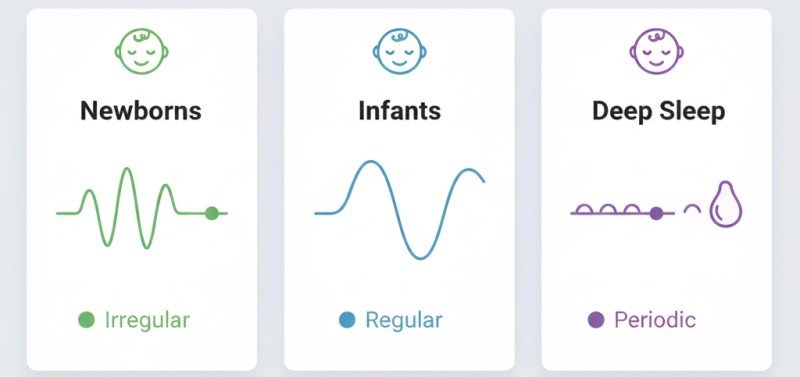
One of the most common causes of parental anxiety is periodic breathing. This is a pattern where a baby breathes rapidly for several seconds, then pauses for up to 10 seconds, and then resumes breathing normally.
While a 5-10 second pause feels like an eternity when you are watching, it is perfectly normal in newborns. Their brain's respiratory center is still learning how to regulate steady breathing. Periodic breathing typically disappears by the time a baby is 6 months old.
2. Normal Noises: Why Babies Sound Like Little Tractors
Babies are surprisingly loud breathers. Because their nasal passages are so tiny, even a microscopic amount of lint or dried mucus can cause whistling or snorting sounds. Common (and usually harmless) noises include:
- Whistling: Usually caused by a small blockage in the nose.
- Gurgling/Rattling: Often just saliva or milk in the back of the throat.
- Snorting: Common during deep sleep or after feeding.
If these sounds are accompanied by congestion, our guide on clearing baby chest congestion naturally offers safe ways to help.
3. Breathing Rates by Age
As your baby grows, their respiratory rate will naturally slow down. Here are the average ranges for resting babies:
| Age Group | Breaths Per Minute (BPM) |
|---|---|
| Newborn (0-3 Months) | 30 - 60 BPM |
| Infant (3-6 Months) | 30 - 45 BPM |
| Infant (6-12 Months) | 24 - 30 BPM |
| Toddler (1-3 Years) | 20 - 25 BPM |
Tip: To count accurately, watch your baby's chest for a full 60 seconds. Counting for only 15 seconds and multiplying can be inaccurate due to the irregular nature of infant breathing.
4. Signs of Respiratory Distress: When to Worry
While irregular rhythms are often normal, there are specific signs that indicate a baby is working too hard to breathe. These are known as signs of respiratory distress:
A. Retractions (Skin Pulling)
If you see the skin pulling in around your baby's ribs, above the collarbone, or at the base of the throat with every breath, it means they are using extra muscles to get air. According to the American Academy of Pediatrics, this is a clear sign that a medical evaluation is needed.
B. Nasal Flaring
If your baby's nostrils widen significantly with every inhale, they are trying to increase the amount of air entering their lungs. If this persists, call your pediatrician.
C. Grunting
A rhythmic "ugh" or grunting sound at the end of every exhale is the body's way of trying to keep the small air sacs in the lungs open. This is different from the occasional grunt while stretching or pooping.
D. Color Changes (Cyanosis)
A blue, gray, or dusky tint around the lips, tongue, or fingernails indicates that the blood isn't getting enough oxygen. This is a medical emergency.
When Does Congestion Affect Breathing?
When a baby has a cold, their breathing might naturally speed up or sound more "wet." While most colds are manageable at home, it's important to know when the congestion has reached the chest.
Read our specialized guide on when to take a baby to the doctor for chest congestion to distinguish between a simple cold and something more serious like bronchiolitis or pneumonia.
Safety Tips for Better Breathing
- Keep the Air Clear: Avoid smoking, strong perfumes, or air fresheners near your baby.
- Safe Sleep: Always place your baby on their back to sleep on a firm, flat surface. This keeps the airway open and reduces the risk of SIDS.
- Humidify: In dry weather, a cool-mist humidifier can keep nasal passages moist. See our comparison of humidifier vs steam for more details.
Stay Alert
If you are ever unsure about your baby's breathing, use your phone to record a 30-second video. This can be incredibly helpful for your pediatrician to see exactly what you are concerned about.