Hearing your baby wheezing at night can be one of the most frightening experiences for any parent. That high-pitched whistling sound coming from your infant's tiny chest as they sleep can send your mind racing with worry. You are not alone in this concern, and in most cases, wheezing in infants has manageable causes.
This guide will help you understand why babies wheeze at night, what signs indicate a problem, and when it is time to call your doctor. Take a breath. We will walk through this together.
Quick Answer for Busy Parents
Occasional mild wheezing at night is common in babies, especially during colds. It usually sounds worse than it is. Stay calm and observe your baby.
Call your doctor if: Your baby has rapid breathing, refuses to feed, shows blue coloring around lips, or seems unusually tired. When in doubt, always call. Pediatricians expect these calls and are there to help.
What Is Baby Wheezing at Night?
Wheezing is a high-pitched whistling sound that occurs when air flows through narrowed airways. The HealthyChildren.org resource from the AAP explains that in babies, these airways are already quite small, so even minor swelling or mucus can create noticeable sounds.
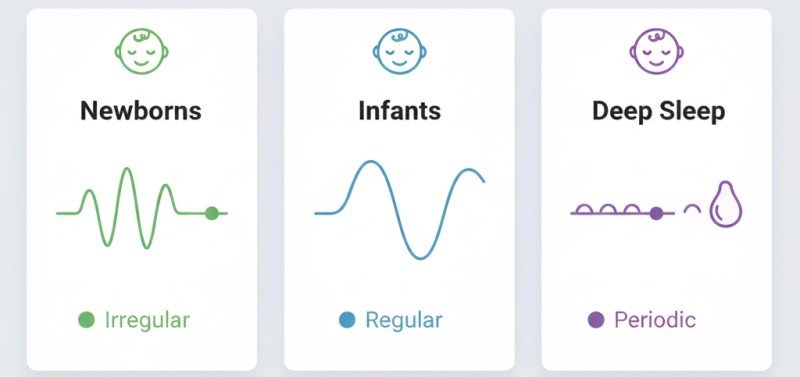
You might hear wheezing when your baby breathes out, though sometimes it happens during inhalation too. It differs from normal newborn breathing sounds, which can include soft grunts, sighs, or occasional snorts.
Many parents first notice wheezing at night because:
- The house is quiet, making sounds more noticeable
- Lying flat can cause mucus to settle in airways
- Nighttime air tends to be drier
- Body temperature and airway inflammation often increase at night
Common Causes of Wheezing in Infants
Understanding why your baby is wheezing helps you respond appropriately. Here are the most common causes:
1. Common Cold and Respiratory Infections
The most frequent cause of baby wheezing at night is a simple cold. According to the American Academy of Pediatrics, babies catch an average of 6-8 colds in their first year. The virus causes inflammation and excess mucus, leading to that whistling sound.
Cold-related wheezing typically comes with other symptoms like a runny nose, mild cough, or slight fever.
2. Chest Congestion and Mucus Buildup
Babies cannot blow their noses or cough effectively like adults. Mucus accumulates in their small airways, creating turbulent airflow that produces wheezing sounds.
This is particularly common at night when your baby has been lying down for extended periods. For guidance on managing this safely, our article on clearing baby chest congestion naturally offers helpful tips.
3. Bronchiolitis
This common infection affects the small airways in the lungs. It typically occurs in babies under 12 months, especially during fall and winter. RSV (respiratory syncytial virus) is the most common cause.
Bronchiolitis often starts like a cold but progresses to more significant wheezing and breathing difficulty over 2-3 days.
4. Asthma-Like Symptoms (Reactive Airway Disease)
Some infants have airways that are more sensitive and reactive. Doctors may call this "reactive airway disease" in babies too young for a formal asthma diagnosis.
These babies wheeze repeatedly, often triggered by colds, cold air, or exercise (crying).
5. Environmental Triggers and Irritants
Your baby's airways may react to:
- Cigarette smoke (even on clothing)
- Strong perfumes or cleaning products
- Dust mites in bedding
- Pet dander
- Dry air from heating systems
- Mold or mildew
6. Allergies
While less common in very young infants, allergies can cause nighttime wheezing in some babies, particularly those with a family history of allergies or eczema.
7. Gastroesophageal Reflux (GERD)
When stomach contents flow back into the esophagus and sometimes into the airways, it can cause wheezing. Babies with reflux may also spit up frequently, arch their backs, or seem uncomfortable after feeding.
Is Wheezing Dangerous for Babies?
This is the question keeping you up at night. The honest answer: it depends.
When Wheezing Is Usually Not Serious
Mild wheezing is often not dangerous when your baby:
- Is feeding normally and staying hydrated
- Has normal skin color (no blue or gray tinge)
- Is alert and responsive when awake
- Has only slightly faster breathing
- Can sleep, even if somewhat restless
- Has wet diapers as usual
Many babies wheeze with colds and recover completely within a week or two with supportive care at home.
When Wheezing Becomes Concerning
Wheezing becomes more serious when it affects your baby's ability to breathe comfortably, eat, or stay alert. Severe wheezing means the airways are significantly narrowed, making it harder for your baby to get enough oxygen.
The next section covers specific warning signs that need medical attention.
Warning Signs: When to See a Doctor Immediately
Trust your parental instincts. If something feels wrong, seek help. Do not worry about "bothering" the doctor. That is exactly what they are there for.
Call 911 or go to the emergency room if your baby has:
- Blue or gray color around the lips, tongue, or fingernails
- Severe difficulty breathing or gasping for air
- Ribs visibly pulling in deeply with each breath
- Breathing that stops for more than 10 seconds
- Inability to cry or make sounds
- Limp body or unresponsiveness
- Drooling and unable to swallow (possible airway obstruction)
Call your pediatrician promptly (same day) if your baby has:
- Rapid breathing (more than 60 breaths per minute)
- Nostrils flaring with each breath
- Skin sucking in between ribs or at the neck
- Grunting sound at the end of each breath
- Refusing to feed or taking much less than usual
- Fever above 100.4F (38C) in babies under 3 months
- Wheezing that gets worse instead of better
- Unusual sleepiness or difficulty waking
- Fewer wet diapers than normal
Schedule a doctor visit within a day or two if:
- Wheezing continues for more than a week
- Your baby has repeated episodes of wheezing
- Wheezing occurs without cold symptoms
- You have a family history of asthma
When Do Doctors Recommend a Nebulizer?
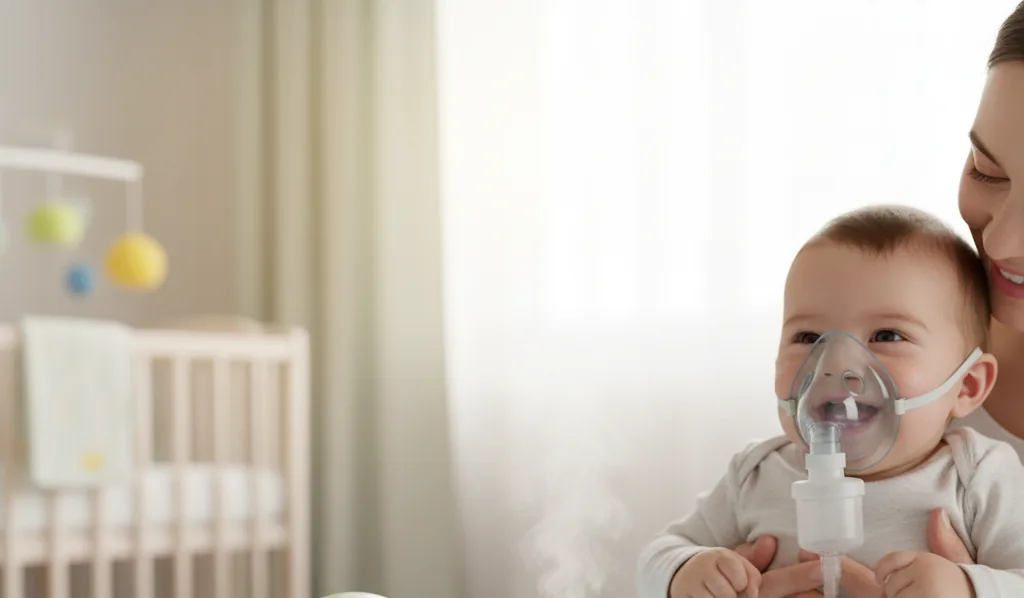
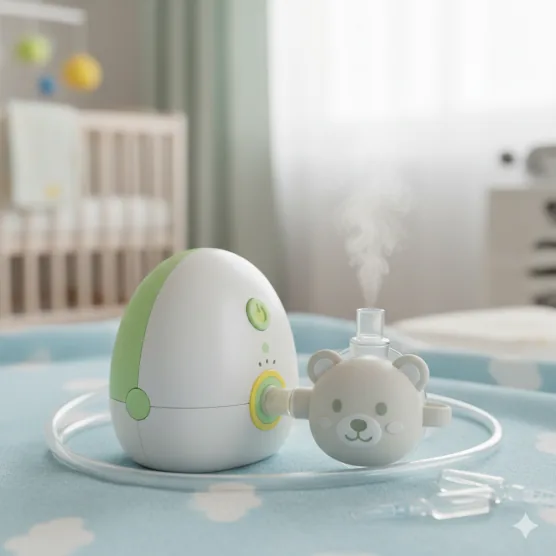
If your baby's wheezing is significant, your pediatrician may recommend nebulizer treatments. A nebulizer turns liquid medication into a fine mist that your baby breathes in, delivering medicine directly to the lungs.
Doctors typically prescribe nebulizers for:
- Bronchiolitis with moderate to severe symptoms
- Reactive airway disease or early asthma
- Wheezing that does not improve with other treatments
- Recurrent wheezing episodes
Important: Never use a nebulizer without a doctor's prescription. The medication type and dosage must be specifically determined for your baby's age, weight, and condition.
If your doctor has recommended nebulization, you can learn more in our comprehensive guide: Is Nebulizer Safe for Newborn Babies? Doctor-Approved Safety Guide.
For understanding when medical professionals typically recommend this treatment, read: When Do Doctors Recommend Nebulization for Babies?
How Parents Can Help at Home (Safe Tips)
While waiting for a doctor's appointment or caring for mild wheezing at home, these measures can help your baby breathe more comfortably:
Positioning
- Keep your baby slightly elevated during sleep (but always on their back)
- Hold your baby upright after feeding
- Try holding your baby in a more upright position when wheezing is noticeable
Safety note: Never use pillows, wedges, or positioners in the crib. These are suffocation hazards. Instead, you can slightly elevate the head of the mattress by placing a folded towel underneath it. For more detailed guidance, read our complete guide on the best sleeping position for a congested baby.
Humidity and Air Quality
- Use a cool-mist humidifier in the bedroom
- Clean the humidifier daily to prevent mold growth
- Run a HEPA air purifier to reduce allergens
- Keep the room at a comfortable temperature (68-72F)
If you are deciding between moisture support and a doctor-prescribed breathing treatment, this learn more about nebulizers vs humidifiers guide explains when each option makes sense.
Nasal Care
- Use saline drops to loosen mucus
- Gently suction with a bulb syringe or nasal aspirator
- Do this before feeding and sleeping for best results
Hydration
- Offer frequent, smaller feeds
- Breast milk or formula helps thin mucus
- Watch for signs of dehydration (dry mouth, fewer wet diapers)
Create a Calm Environment
- Keep your baby calm; crying makes wheezing worse
- Remove strong scents and potential irritants
- Ensure no one smokes anywhere near your baby
- Keep pets out of the sleeping area temporarily
What NOT to Do
- Do not give over-the-counter cold medicines to babies under 2 years
- Do not use vapor rubs on infants under 2 years
- Do not give honey to babies under 1 year
- Do not use essential oils in diffusers around babies
- Do not delay seeking medical care if warning signs appear
Know the red flags. Read our detailed guide: when to take your baby to the doctor for chest congestion.
Tracking Your Baby's Symptoms
Keeping a simple record can help your doctor understand what is happening:
- When does wheezing occur (time of day/night)?
- How long does each episode last?
- What seems to trigger it?
- Is it getting better or worse?
- How is your baby eating and sleeping?
- Any other symptoms (fever, cough, runny nose)?
A short video of your baby wheezing can be incredibly helpful for your pediatrician to review.
Medical Disclaimer
This article is for informational purposes only and does not constitute medical advice. Every baby is different, and what applies generally may not apply to your child's specific situation.
Always consult with your pediatrician or healthcare provider for personalized medical advice, diagnosis, or treatment. If you are concerned about your baby's breathing, seek medical attention promptly.
Never delay emergency care based on information read online.
A Reassuring Note for Worried Parents
It is 2 AM. You are exhausted. Your baby is making sounds that worry you. It is completely natural to feel scared.
Here is what you need to know: most babies who wheeze get better. Many parents go through exactly what you are experiencing right now, and their babies are just fine.
Your job is not to diagnose or treat. Your job is to love your baby, keep them comfortable, and know when to ask for help. You are already doing that by reading this article.
Trust yourself. You know your baby better than anyone. If your gut tells you something is wrong, call the doctor. They will not judge you for being cautious. In fact, they expect and appreciate parents who advocate for their children's health.
This difficult time will pass. Hang in there.
More Congestion & Medication Guides
For adult/general medication education, read mucinex for chest congestion, decongestant for stuffy nose, and flonase for congestion. For mixed symptom support, see stuffy nose and cough home care, flu congestion relief, and steam inhalation vs nebulizer.
Frequently Asked Questions
Babies often wheeze more at night because lying down allows mucus to pool in the airways. The air is also typically drier at night, and there are fewer distractions so parents notice the sound more easily. Nighttime position changes and cooler air temperatures can also trigger wheezing.
Some mild wheezing or noisy breathing can be normal in newborns due to their narrow airways. However, persistent wheezing, especially with difficulty breathing or feeding, should be evaluated by a pediatrician. Trust your instincts - if something feels wrong, seek medical advice.
Take your baby to the emergency room immediately if you notice: blue or gray color around lips or fingernails, severe difficulty breathing, ribs visibly pulling in with each breath, baby is unable to cry or make sounds, breathing stops for more than 10 seconds, or baby becomes limp or unresponsive.
Yes, a cool-mist humidifier can help ease wheezing by adding moisture to the air and loosening mucus. Place it near (not directly next to) your baby's sleep area. Clean it daily to prevent mold and bacteria growth. Avoid warm-mist humidifiers as they pose a burn risk.
Serious wheezing is accompanied by: rapid breathing (more than 60 breaths per minute in infants), flaring nostrils, skin pulling between ribs or at the neck, difficulty feeding or refusing to eat, unusual drowsiness, or fever above 100.4F (38C) in babies under 3 months.
Not all wheezing requires a nebulizer. Doctors prescribe nebulizers when medication needs to reach the lungs directly, typically for conditions like bronchiolitis or asthma-like symptoms. Never use a nebulizer without a doctor's prescription. For more information, read our guide on nebulizer safety for newborns.
Yes, environmental allergens like dust mites, pet dander, or mold can trigger nighttime wheezing in sensitive babies. Keeping the sleep environment clean, using hypoallergenic bedding, and running an air purifier may help. If you suspect allergies, consult your pediatrician for proper evaluation.
Wheezing from a common cold typically improves within 7-10 days as the infection clears. However, some babies may wheeze for up to 2-3 weeks after a respiratory infection. If wheezing persists beyond 3 weeks or worsens, consult your pediatrician to rule out other causes.