
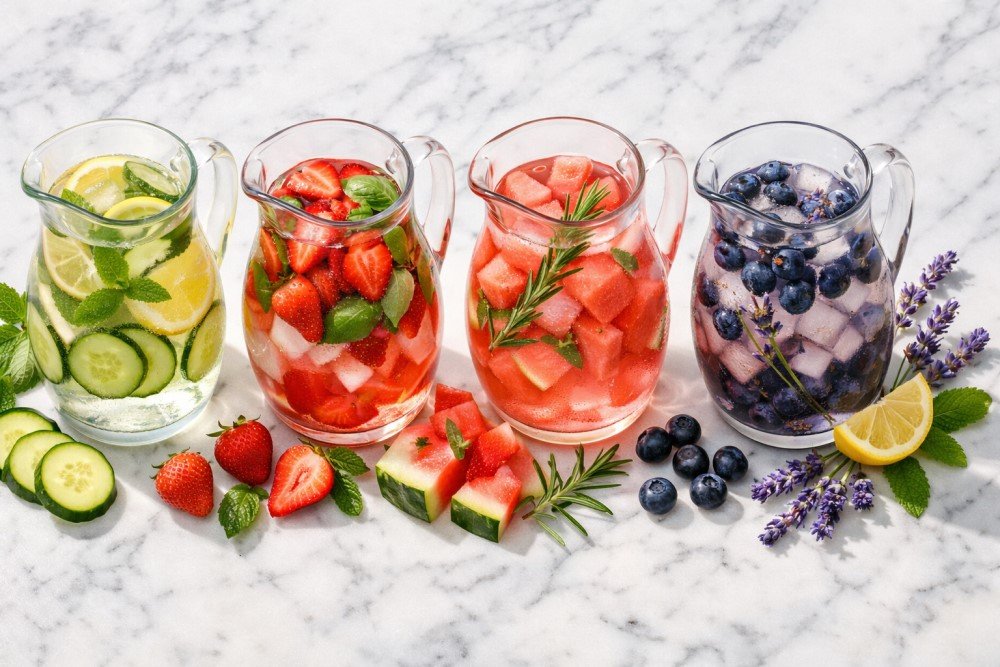
When people think about hydration, they usually think about water bottles first. That makes sense, but it is only part of the picture. Many foods naturally contain a lot of water, and in hot weather they can make hydration feel easier, lighter, and more realistic to maintain through the day.
If you struggle to drink enough in summer, water-rich foods can help you stay more consistent. They are especially useful when plain water feels boring, your appetite changes in the heat, or you want hydration support that also brings some fiber, potassium, or protein with it. If you want your direct fluid target first, start with our water intake calculator and then use this guide to build smarter meals and snacks around it.
Quick Answer
The best water-rich foods for hydration include watermelon, cucumber, oranges, strawberries, lettuce, tomatoes, yogurt, and broth-based soups. These foods support hydration, but they work best alongside regular fluid intake rather than replacing water completely.
Best next steps: Water Intake Calculator | Summer Hydration Guide | Signs of Dehydration
Why water-rich foods help in summer
Hydration often slips when routines change. You might be outside more, sweating more, traveling, skipping meals, or relying on iced coffee and snacks instead of balanced meals. Water-rich foods help by adding fluids in a way that feels more automatic. They also tend to be easier to tolerate in hot weather than heavier meals.
- They raise total fluid intake without forcing you to drink all of it
- They often bring nutrients like potassium, vitamin C, and fiber
- They fit well into snacks, lunches, and lighter summer meals
- They can make rehydration feel easier after heat exposure
If you want the bigger seasonal strategy, pair this page with our summer wellness guide for women and how much water to drink in summer.
1. Watermelon
Watermelon is one of the easiest hydrating foods to use in summer. It is mostly water, easy to eat when you feel overheated, and works well as a snack after time outdoors.
- Best for: hot afternoons, post-walk snacks, picnic food
- Easy use: cubes, chilled slices, smoothie base, fruit bowl
- Pair it with: yogurt, cottage cheese, or nuts if you want better staying power
2. Cucumbers
Cucumbers are simple, cheap, and easy to add to meals. They work well when you want something crisp and cooling but do not want a sugary option.
- Best for: lunches, salads, snack plates, sandwiches
- Easy use: sliced with salt, added to wraps, tossed into yogurt sauces
- Helpful note: a little salt with cucumber can make it more satisfying after sweating
3. Oranges and citrus fruit
Oranges are helpful because they give you both fluid and a portable snack option. They are especially useful for summer travel, park days, and post-exercise routines when you want something refreshing that does not feel heavy.
- Best for: travel bags, beach coolers, afternoon energy dips
- Easy use: whole oranges, orange segments, citrus fruit cups
- Pair it with: a salty snack or yogurt if you need something more substantial
4. Strawberries and berries
Berries are not as dramatic as watermelon, but they are still useful hydration support. They work well when appetite is low and you want a lighter snack that still feels fresh.
- Best for: breakfast bowls, smoothies, easy snacks
- Easy use: mixed into yogurt, overnight oats, cottage cheese, or fruit salads
- Why they help: small, easy to portion, and easy to keep cold
5. Lettuce, tomatoes, and crunchy salad vegetables
Many summer lunches become more hydrating simply by including high-water vegetables more intentionally. Lettuce, tomatoes, celery, radishes, and bell peppers can all help you build a meal that feels lighter and less dehydrating.
This matters most when summer eating becomes random. A sandwich with lettuce, tomato, cucumber, and fruit on the side will usually support hydration better than a dry grab-and-go snack meal.
6. Yogurt
Yogurt is useful because it supports hydration while also giving you protein. That makes it more satisfying than fruit alone and often more realistic as a breakfast, snack, or recovery option.
- Best for: breakfast, post-walk snack, light dinner add-on
- Easy use: yogurt bowls with berries, cucumber-yogurt sauces, smoothies
- Extra benefit: pairs well with fruit if you are trying to eat lighter meals in heat
7. Broth-based soups and lighter soups
Soup does not have to be a winter-only food. In many households, light soups, broths, and vegetable soups are one of the easiest ways to bring in fluid, sodium, and a more complete meal at the same time. They can be especially helpful if you are recovering from a stomach bug, heat exposure, or a day when you did not eat much.
If you are dealing with clearly low energy, dizziness, or stronger dehydration symptoms, food alone may not be enough. In those cases, read signs of dehydration and consider whether you need more direct fluids or electrolyte support.
8. Smoothies and blended hydrating snacks
Smoothies can be helpful when you want fluid plus food but do not feel like eating a full meal. The key is to keep them practical rather than turning them into dessert.
- Use a fruit base like watermelon, berries, or orange
- Add yogurt if you want more protein and staying power
- Keep them simple when heat makes appetite unpredictable
- Do not assume smoothies replace water all day long
When water-rich foods are most useful
- Hot afternoons: when you know you tend to fall behind on fluids
- Summer travel: when routines break and water intake gets inconsistent
- Outdoor family days: when fruit and snack plates are easier than full meals
- After light heat exposure: when you need a cooling reset but not a full recovery drink
- Low appetite days: when heavy meals feel unappealing
What water-rich foods cannot do
Water-rich foods are supportive, but they are not a substitute for direct fluids when you are truly behind. If you are dizzy, getting a dehydration headache, urinating very little, or losing fluids from vomiting or diarrhea, you usually need water or an oral rehydration approach more directly.
That is why it helps to think of hydrating foods as part of your summer routine, not the entire plan. Use them to make hydration easier, not to replace paying attention to thirst, urine color, and heat symptoms.
A simple summer hydration food routine
- Morning: yogurt with berries or citrus on the side
- Lunch: cucumber, tomato, or lettuce-heavy meal plus water
- Afternoon: watermelon or orange as a cooling snack
- Evening: lighter soup, fruit, or yogurt if appetite is lower in the heat
If you want a better personal target for fluids around those meals, use our water intake calculator. If you want the broader summer hydration plan, continue with our summer hydration guide for women.
Bottom line
The best water-rich foods for hydration are the ones you will actually keep in rotation: watermelon, cucumber, oranges, berries, lettuce, tomatoes, yogurt, and soups are all practical choices. They will not replace water entirely, but they can make summer hydration feel much more manageable.
If your hydration still feels inconsistent, use this page together with our summer water guide, the water intake calculator, and dehydration signs guide.
Frequently Asked Questions
What foods help with hydration the most?
Foods with high water content such as watermelon, cucumber, oranges, strawberries, lettuce, tomatoes, soups, and yogurt are some of the most practical options for hydration support.
Can food really count toward hydration?
Yes. Many people get part of their daily fluids from food, especially fruit, vegetables, yogurt, and soups. Food helps support hydration, but it should not replace drinking water completely.
Are water-rich foods enough when you are dehydrated?
They can help with mild day-to-day hydration support, but if you are clearly dehydrated, overheated, dizzy, vomiting, or losing fluids fast, you usually need direct fluids and sometimes electrolytes as well.
What are the best hydrating foods for summer?
Summer-friendly choices include watermelon, cucumbers, oranges, berries, tomatoes, lettuce, yogurt bowls, chilled soups, and simple smoothies made with fruit and yogurt.