Your metabolism does not fall off a cliff at 30 -- but it does change. Every decade brings subtle shifts in how your body burns energy at rest, influenced by hormones, muscle mass, activity levels, and lifestyle habits. Understanding how your Basal Metabolic Rate shifts through each decade empowers you to adjust your nutrition and habits proactively rather than reactively. Start by finding your current number with our BMR calculator. Then use this guide to understand what is normal for your age and what you can do about it.
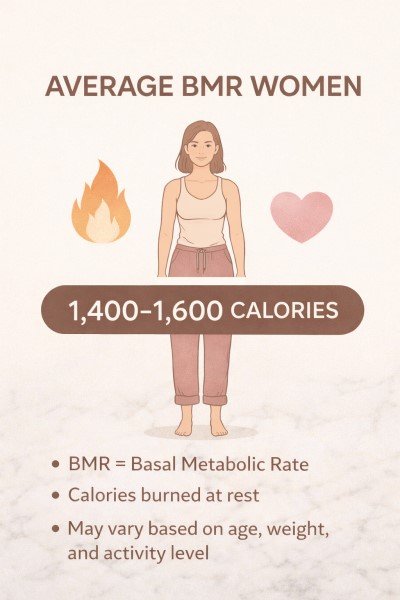
Whether you are in your 20s and building the foundation, in your 40s navigating perimenopause, or in your 50s and beyond adjusting to a new hormonal landscape, your BMR tells an important story about your body's energy needs. For a broader overview of typical ranges regardless of age, see our guide to average BMR for women. This article dives deeper into what happens at each stage and gives you practical tools to support your metabolism at every age.
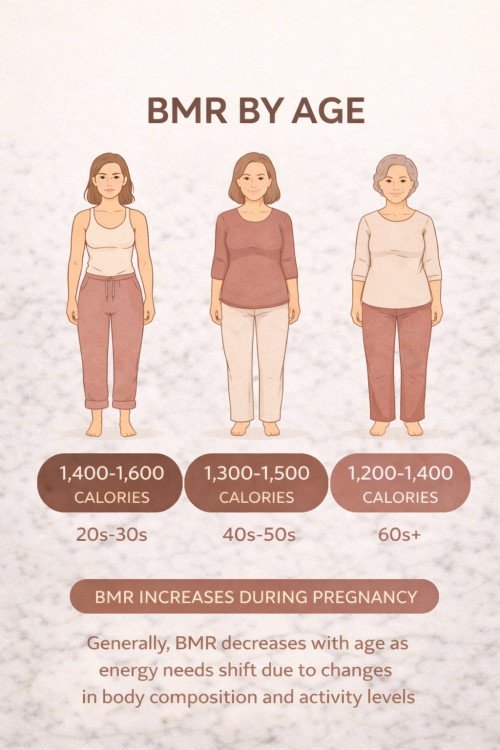
The Big Picture -- BMR Decline by Decade
Before we walk through each decade in detail, here is a high-level view of how BMR typically changes as women age. These ranges are based on average-height women (5'4" to 5'5") at a healthy weight. Individual results will vary based on body composition, genetics, and activity level.
| Age | Average BMR Range | Avg Decline from 20s | Key Factor |
|---|---|---|---|
| 20s | 1,350-1,550 cal/day | Baseline | Peak muscle mass |
| 30s | 1,300-1,500 cal/day | ~2-3% | Lifestyle changes |
| 40s | 1,250-1,450 cal/day | ~5-7% | Perimenopause begins |
| 50s | 1,200-1,400 cal/day | ~8-12% | Menopause transition |
| 60+ | 1,100-1,300 cal/day | ~12-15% | Muscle preservation critical |
Note: These ranges are based on average-height women (5'4" to 5'5") at a healthy weight. Individual results vary significantly based on body composition, genetics, and lifestyle. A landmark NIH study found that metabolism remains relatively stable between ages 20 and 60, declining more significantly only after 60 -- so the changes you experience earlier are often more about lifestyle than biology. Read the full research here.
Your 20s -- Peak Metabolic Years
Your 20s represent your metabolic peak. Your body has finished developing, muscle mass is at or near its highest natural level, and your hormonal profile supports efficient calorie burning. Most women in their 20s have a BMR in the range of 1,350 to 1,550 calories per day, making this the decade when your body is most forgiving of dietary inconsistencies.
However, this is also where one of the biggest mistakes happens. Many women in their 20s rely on their naturally high metabolism without building the habits that will serve them later. They skip strength training, sleep irregularly, and eat without much thought to protein or nutrient density. The irony is that your 20s are actually the easiest time to build muscle and establish metabolic health -- future you will thank you for starting now.
- Start strength training now. Building muscle in your 20s creates a metabolic foundation that pays dividends for decades.
- Establish good sleep patterns. Consistent sleep of seven to nine hours supports hormonal balance and metabolic health long-term.
- Do not take your metabolism for granted. The habits you build now determine how your body responds to the changes ahead.
Your 30s -- The Subtle Shift
In your 30s, BMR drops slightly -- roughly two to three percent from your 20s baseline. For most women, this translates to burning about 30 to 50 fewer calories per day at rest. That may sound small, but over a year it adds up to several pounds of potential weight gain if eating habits remain unchanged.
The biggest changes in your 30s are usually driven by lifestyle rather than biology. This decade often coincides with pregnancy, career stress, reduced gym time, and more sedentary routines. Muscle loss begins if you are not actively maintaining it through resistance training. The good news is that the biological decline at this stage is minimal -- it is the lifestyle shifts that matter most.
- Prioritize protein. Aim for at least 0.7 grams per pound of body weight to preserve and build lean muscle tissue.
- Commit to two to three strength sessions per week. This is the most effective way to offset the gradual metabolic slowdown.
- Monitor your baseline health. Check your BMI as a simple starting point and track changes over time rather than fixating on a single number.
Your 40s -- Perimenopause and Metabolism
The 40s bring more noticeable metabolic changes. BMR may decline five to seven percent compared to your 20s, and for many women this decade marks the beginning of perimenopause. Estrogen levels begin to fluctuate unpredictably, which can affect everything from where your body stores fat (hello, belly fat) to how well you sleep and how your body handles insulin.
Perimenopause symptoms such as hot flashes, sleep disruption, mood changes, and increased anxiety can indirectly affect your metabolism by disrupting sleep quality and increasing stress hormones like cortisol. Insulin sensitivity may also decrease, making it harder for your body to process carbohydrates efficiently. This is the decade where proactive changes become essential rather than optional.
- Strength training becomes non-negotiable. Resistance exercise is the single most powerful tool for maintaining muscle mass and metabolic rate during hormonal transitions.
- Focus on stress management and sleep quality. Poor sleep and chronic stress elevate cortisol, which promotes fat storage and muscle breakdown.
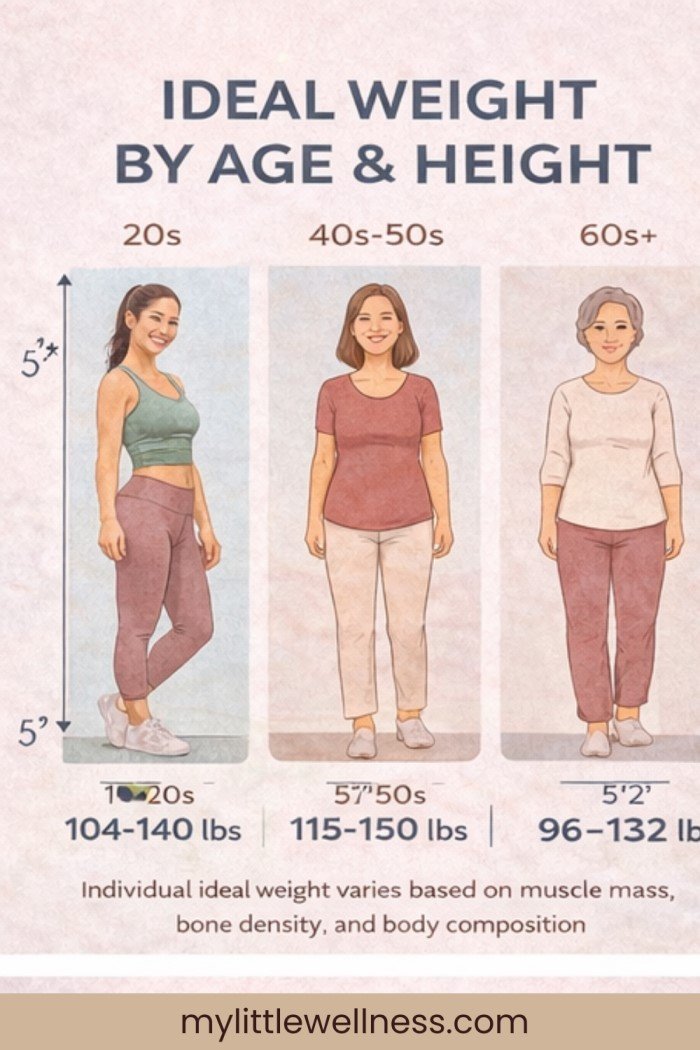
- Check your ideal weight range. Your ideal weight range adjusts for age, giving you a more realistic target than the number you weighed at 25.
Your 50s -- Menopause and Beyond
Menopause, which occurs at an average age of 51, significantly reshapes the hormonal landscape. Estrogen and progesterone drop to new baseline levels, and BMR may decline eight to twelve percent compared to your 20s. Without deliberate intervention, muscle loss accelerates during this decade, which further lowers your resting metabolic rate and makes weight management increasingly challenging.
Bone density also becomes a major concern after menopause. Weight-bearing exercise is not just important for metabolism -- it is essential for preventing osteoporosis and maintaining functional strength. The combination of adequate protein, regular resistance training, and overall active living can make a dramatic difference in how you feel and function during this stage.
- Increase protein intake to 0.8 to 1 gram per pound of body weight. Higher protein supports muscle preservation and bone health during menopause.
- Stay hydrated. Hydration needs can change during menopause. Check your water needs and adjust accordingly.
- Recalculate your BMR and TDEE regularly. As your body changes, your calorie needs shift. Staying current with your numbers prevents both overeating and undereating.
Your 60s and Beyond -- Staying Strong
BMR continues its gradual decline after 60, but this is absolutely not a reason to give up. In fact, this is when healthy habits matter more than ever. Research consistently shows that resistance training is safe, effective, and highly recommended for older adults. Women who maintain an active lifestyle and prioritize protein can preserve far more muscle mass and metabolic function than those who become sedentary.
Beyond metabolism, this stage of life calls for a holistic approach. Balance and flexibility exercises help prevent falls and injuries. Adequate protein intake prevents sarcopenia, the age-related muscle wasting that accelerates frailty. Social connection supports both mental health and physical activity levels -- people who stay socially engaged tend to move more and maintain better health overall. Regular health checkups become increasingly important for catching and managing any emerging conditions early.
Practical Tips for Every Age
Regardless of which decade you are in, these evidence-based habits will support your metabolism and overall health at any stage of life.
- Strength train two to three times per week. This applies at any age and is the most effective way to maintain or increase your BMR.
- Eat 0.7 to 1 gram of protein per pound of body weight. Protein supports muscle maintenance, recovery, and has a higher thermic effect than other macronutrients.
- Get seven to nine hours of quality sleep. Sleep is when your body repairs muscle, regulates hormones, and restores metabolic function.
- Walk 7,000 to 10,000 steps daily. Non-exercise activity thermogenesis (NEAT) accounts for a significant portion of your daily calorie burn.
- Manage stress proactively. Chronic stress elevates cortisol, which promotes fat storage and muscle breakdown.
- Stay hydrated. Even mild dehydration can slow metabolic processes and reduce energy levels.
- Recalculate your numbers regularly with our BMR calculator to stay current with your body's changing needs.
- Do not compare your metabolism to someone else's. Focus on your own trends over time rather than chasing someone else's numbers.
- If pregnancy is relevant to your current life stage, read our guide on BMR during pregnancy and postpartum for specific guidance.
What to Do Next
Understanding how your BMR changes by decade is powerful knowledge, but it only becomes useful when you act on it. Here is where to start.
- Calculate your BMR now using our BMR calculator to get your personalized baseline number in seconds.
- Read about average BMR for women in our detailed guide to see how your number compares to typical ranges for your age and weight.
- Not sure if your numbers are healthy? Use our BMI calculator as a quick health baseline alongside your metabolic data.
Your metabolism is not a fixed number. It is a living, changing system that responds to how you treat your body. The sooner you understand your numbers and take intentional action, the better you will feel at every age.
Frequently Asked Questions
At what age does metabolism slow down the most?
The most noticeable metabolic decline typically begins in your 40s and accelerates after 50, largely due to muscle loss, hormonal shifts during menopause, and reduced activity levels. However, recent research suggests the decline is more gradual than previously thought, at roughly one to two percent per decade.
What is a normal BMR for a 40-year-old woman?
A normal BMR for a 40-year-old woman of average height and healthy weight ranges from approximately 1,200 to 1,400 calories per day. However, this varies based on your specific height, weight, muscle mass, and overall health.
Can I have the same metabolism at 50 as I did at 30?
While you cannot completely prevent age-related BMR decline, you can significantly slow it. Women who maintain muscle mass through strength training, stay active, eat adequate protein, and sleep well can keep their metabolism much closer to their younger levels.
Why do women gain weight after 40?
Weight gain after 40 is often caused by a combination of lower BMR due to muscle loss, hormonal changes from perimenopause and menopause, decreased daily movement, increased stress, and sleep disruption. These factors together create a gradual shift toward weight gain unless habits are adjusted.
How often should I recalculate my BMR?
Recalculate your BMR every time your weight changes by 10 or more pounds, after a significant birthday decade, if your activity level changes substantially, or every three to six months if you are actively working on weight management.
Disclaimer: This article is for informational purposes only and does not constitute medical advice. Metabolism varies significantly between individuals. Consult a healthcare professional for personalized guidance.