
If your metabolism feels sluggish, you are not stuck with it. Your basal metabolic rate (BMR) is not a fixed number written in stone. It is influenced by your body composition, daily habits, nutrition, and sleep quality, which means you have more control over it than you might think. The good news is that with the right lifestyle changes, you can raise your BMR and burn more calories even while sitting on the couch or sleeping at night.
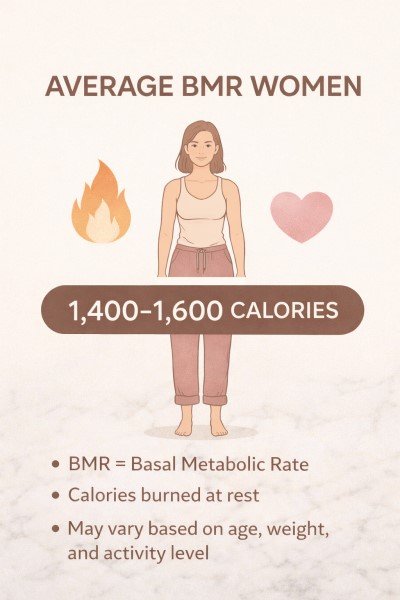
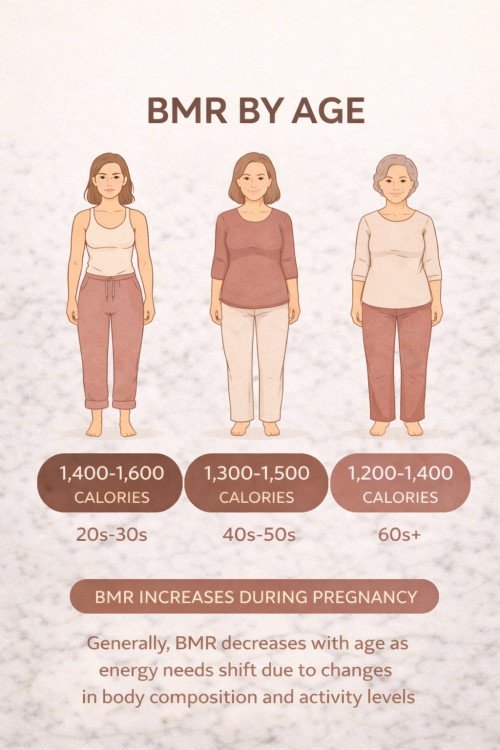
Before you start making changes, it helps to know where you currently stand. Use our free BMR calculator to find your baseline number. Then compare your result against the average BMR for women by age and weight to see how you measure up. Once you have your starting point, use the strategies below to start boosting your metabolism naturally.
Why Women's BMR Tends to Be Lower
If you have ever compared your calorie needs to a male partner or friend and felt frustrated, understand that the difference is rooted in biology. Women naturally carry a higher percentage of body fat and less muscle mass than men. Since muscle tissue is more metabolically active than fat tissue, this directly translates into a lower resting metabolic rate.
Hormonal differences also play a role. Estrogen and progesterone influence how your body stores and burns energy, and these hormones fluctuate throughout your menstrual cycle, during pregnancy, and into menopause. None of this is a flaw. It is simply how the female body is designed.
What is a problem, however, is the damage caused by extreme dieting. When you drastically cut calories for extended periods, your body responds with adaptive thermogenesis, actively lowering your BMR to conserve energy. This survival mechanism is one of the biggest reasons crash diets backfire. The strategies below work with your biology instead of against it.
Strategy 1 — Build Muscle with Strength Training
This is the single most effective way to increase your BMR. Muscle tissue burns roughly 6 to 10 calories per pound at rest, compared to only 2 to 3 calories per pound for fat tissue. That means every pound of muscle you add increases the number of calories your body burns around the clock, even when you are not exercising.
You do not need to become a bodybuilder or spend hours in the gym. Aim for two to three strength-training sessions per week, focusing on compound movements that work multiple muscle groups at once. Squats, deadlifts, rows, overhead presses, and lunges give you the most return on your time investment.
If you are brand new to lifting, start with bodyweight exercises like push-ups, squats, and glute bridges. Even these basic movements stimulate muscle growth when performed consistently. Once you feel comfortable, gradually add resistance with dumbbells, resistance bands, or barbells. The key is progressive overload: slowly increasing the challenge over time so your muscles keep adapting and growing.
Beginner tip: Start with two full-body sessions per week using just bodyweight or light dumbbells. Focus on learning proper form before adding heavier weights. Consistency matters more than intensity in the beginning.
Strategy 2 — Eat Enough Protein
Protein has a powerful metabolic advantage thanks to the thermic effect of food (TEF). Your body burns 20 to 30 percent of protein's calories just during digestion and absorption. Compare that to 5 to 10 percent for carbohydrates and 0 to 3 percent for fat. Simply by eating more protein, you increase the number of calories your body burns processing your food.
Beyond the thermic effect, protein is essential for building and preserving muscle mass, which directly supports a higher BMR. Aim for 0.7 to 1 gram of protein per pound of body weight each day. If you weigh 140 pounds, that translates to roughly 100 to 140 grams of protein daily.
Great protein sources include chicken breast, eggs, Greek yogurt, lentils, fish, cottage cheese, tofu, and lean beef. For the best results, spread your protein intake across all your meals rather than loading it into one or two sittings. Research suggests that distributing 25 to 40 grams of protein per meal optimizes muscle protein synthesis throughout the day.
Strategy 3 — Prioritize Sleep
Sleep is one of the most underrated factors in metabolic health. When you do not get enough quality rest, your body responds by lowering your BMR and disrupting key hunger hormones. Ghrelin, the hormone that signals hunger, goes up. Leptin, the hormone that tells you when you are full, goes down. The result is a slower metabolism combined with stronger cravings, which is a recipe for weight gain.
Aim for 7 to 9 hours of sleep per night. Quality matters just as much as quantity. To improve your sleep, maintain a consistent bedtime and wake time, even on weekends. Keep your bedroom dark and cool. Avoid screens for at least one hour before bed, as blue light suppresses melatonin production.
If you struggle with a racing mind at bedtime, check out our guide on how to calm an overactive mind at night. Better sleep does not just make you feel more rested. It directly supports a higher, healthier metabolic rate.
Strategy 4 — Stay Hydrated
Dehydration quietly slows down your metabolism. Even mild dehydration of 1 to 2 percent can reduce metabolic efficiency. On the other hand, studies show that drinking 500ml of water can boost BMR by 24 to 30 percent for about an hour after consumption. Cold water may produce an even greater temporary boost because your body expends extra energy warming it to body temperature.
Most women do not drink enough water throughout the day. Use our water intake calculator to find out exactly how much you should be drinking based on your weight, activity level, and climate.
Tip: Drink a full glass of water first thing in the morning. After six to eight hours of sleep, your body is dehydrated, and rehydrating immediately helps kickstart your metabolism for the day ahead.
Strategy 5 — Stop Extreme Dieting
If you have a history of yo-yo dieting or very low calorie intake, your BMR may already be suppressed. When you eat far fewer calories than your body needs for an extended period, it responds by lowering your metabolic rate to conserve energy. This metabolic adaptation is your body's survival mechanism, and it can persist long after the diet ends.
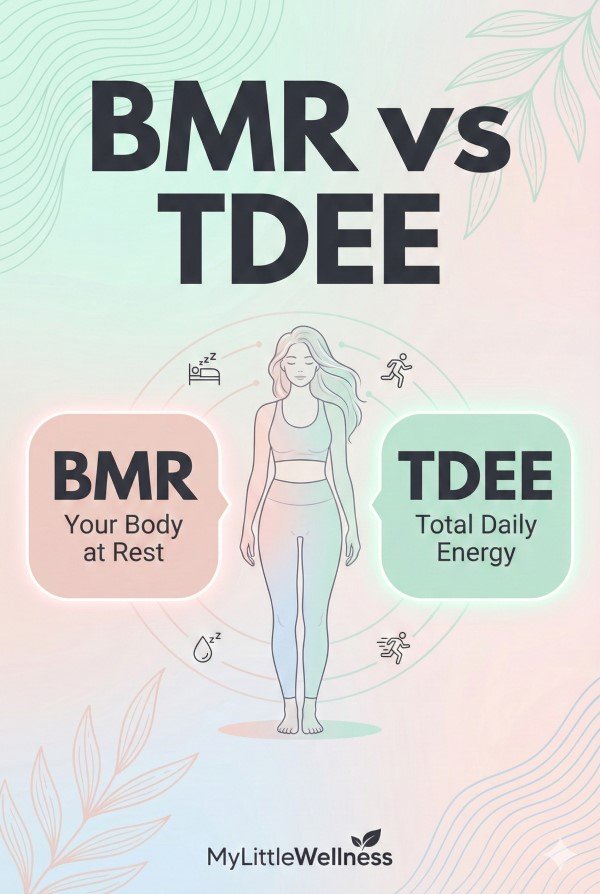
A better approach is to eat at a moderate calorie deficit of 300 to 500 calories below your total daily energy expenditure (TDEE). This allows for steady fat loss without triggering significant metabolic slowdown. Make sure your calories come from nutrient-dense foods, with adequate protein to protect your muscle mass.
If you have been dieting hard and your weight loss has stalled, your metabolism may have adapted. Read our article on why weight loss stalls even in a calorie deficit to understand what is happening and how to fix it.
What NOT to Do
There is a lot of misleading advice circulating about metabolism. Here are common approaches that do not meaningfully increase your BMR:
- "Fat burner" supplements — Most are mostly caffeine with unproven ingredients. They do not cause lasting metabolic change and can have unwanted side effects.
- Eating six small meals a day — Meal frequency does not meaningfully change BMR. Total calorie and protein intake matter far more than how many times you eat.
- Excessive cardio without strength training — Long, frequent cardio sessions without resistance training can actually lead to muscle loss, which lowers your BMR over time.
- Skipping meals to "save" calories — This often leads to overeating later and can signal your body to conserve energy, working against your metabolic goals.
Track Your Progress
Increasing your BMR is a gradual process, so tracking your progress helps you stay motivated and make adjustments along the way. Recalculate your BMR every 4 to 8 weeks using our BMR calculator to see how your number changes as you build muscle and improve your habits.
While you are at it, keep an eye on other important metrics. Check your BMI for a general health snapshot and use our ideal weight calculator to set realistic body composition goals.
Focus on trends over time, not daily fluctuations. Your weight and metabolic rate will vary day to day due to hydration, sleep, hormones, and stress. What matters is the direction you are heading over weeks and months.
For more on the science of metabolism, see this Harvard Health article on the truth about metabolism.
Frequently Asked Questions
Can you actually increase your BMR?
Yes. The most effective way is building muscle through strength training, since muscle tissue burns more calories at rest than fat. Improving sleep quality, eating adequate protein, staying hydrated, and avoiding extreme diets also support a higher BMR.
How long does it take to increase BMR?
You may notice small changes in four to six weeks of consistent strength training. Significant BMR increases from added muscle mass typically take three to six months. Be patient and consistent with your approach.
Does cardio increase BMR?
Cardio temporarily raises your metabolic rate during and shortly after exercise, but it does not significantly increase your resting BMR long-term. Strength training is more effective for raising BMR because it builds muscle mass.
Will eating more protein boost my metabolism?
Protein has a higher thermic effect than carbs or fat, meaning your body burns more calories digesting it. Eating adequate protein also helps build and preserve muscle, which supports a higher BMR over time.
Does drinking water increase BMR?
Drinking water can temporarily boost metabolism by about 24 to 30 percent for roughly an hour. Cold water may have a slightly greater effect. Staying consistently hydrated supports overall metabolic function.
This article is for informational purposes only and does not constitute medical advice. Consult a healthcare professional before starting any new exercise or nutrition program.