
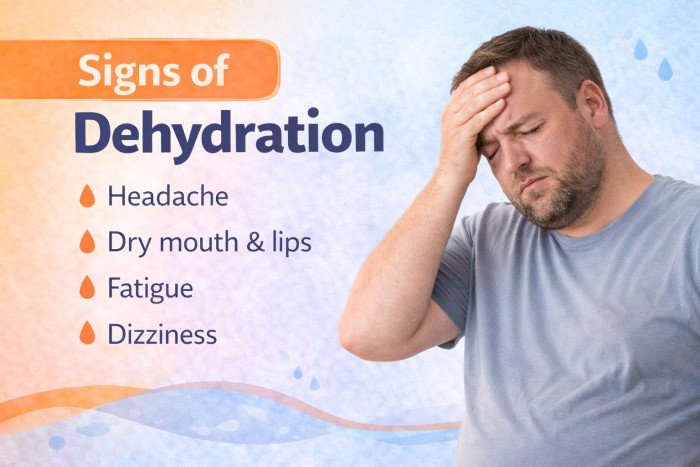
Heat illness can escalate faster than people expect. Many adults brush off early symptoms as “just tired,” “just dehydrated,” or “just the weather,” but there is a big difference between being overheated, having heat exhaustion, and progressing into heat stroke.
The short version is this: heat exhaustion is serious and needs quick action, while heat stroke is a medical emergency. Knowing the difference matters because the right next step changes fast once mental status, fainting, or severe weakness enters the picture.
Quick Difference
Heat exhaustion usually includes heavy sweating, weakness, headache, nausea, dizziness, and feeling faint. Heat stroke becomes an emergency when confusion, collapse, or clear mental changes appear.
Best next steps: Signs of Dehydration | How to Rehydrate Fast | Summer Hydration Guide
Heat exhaustion symptoms
- Heavy sweating
- Weakness or shakiness
- Headache
- Nausea
- Dizziness or feeling faint
- Cool, clammy skin
- Muscle cramps
Heat exhaustion often happens after time outdoors, exercise in heat, long travel days, or not replacing fluids well enough. If the person is still alert and symptoms improve after cooling down and resting, that fits more with heat exhaustion than heat stroke.
Heat stroke warning signs
- Confusion or disorientation
- Fainting or collapse
- Severe weakness that keeps worsening
- Trouble responding normally
- Symptoms getting worse instead of better after leaving the heat
Once symptoms move into mental-status changes or collapse, do not treat it like a routine hydration problem. That is when urgent medical help matters most.
What to do for heat exhaustion
- Move to shade, air-conditioning, or a cooler room
- Stop activity and sit or lie down
- Loosen clothing and use cool cloths or a fan if available
- Drink fluids steadily if the person is fully awake and able to keep fluids down
If dehydration is part of the problem, continue with our guide on how to rehydrate fast. If symptoms do not improve, worsen, or the person cannot drink safely, move beyond home care.
When to stop home treatment and get help
Do not keep trying to “wait it out” if any of these appear:
- Confusion, unusual behavior, or poor responsiveness
- Fainting
- Repeated vomiting
- Rapid worsening in the heat
- No improvement after cooling and rest
How heat illness and dehydration overlap
Heat exhaustion and dehydration often show up together. That is why many people feel weak, headachy, irritable, and dizzy before they realize how far behind they are. But heat illness is not only about fluids. The environment and your body’s ability to cool itself matter too.
If your main question is whether this started as dehydration, see signs of dehydration. If your concern is prevention, use the water intake calculator and our summer water guide.
Bottom line
Heat exhaustion means act quickly. Heat stroke means get emergency help. The biggest mistake is assuming the person just needs a few more sips of water when the symptoms have already moved beyond ordinary dehydration.
Frequently Asked Questions
How do you tell the difference between heat exhaustion and heat stroke?
Heat exhaustion usually includes heavy sweating, weakness, nausea, and dizziness while the person is still alert. Heat stroke is more dangerous and may include confusion, collapse, or a change in mental status and needs emergency care.
Is heat stroke always an emergency?
Yes. Heat stroke is a medical emergency and needs urgent help right away.
Can heat exhaustion turn into heat stroke?
Yes. If heat exhaustion keeps worsening or the person stays in heat without cooling and fluids, it can progress into heat stroke.
Can heat exhaustion be treated at home?
Sometimes, yes. If the person is alert, improving after cooling down, and able to keep fluids down, home care may help. If symptoms worsen, vomiting starts, or confusion appears, get urgent medical help.