Swimming is not only fun for kids but also a crucial life skill that boosts confidence, fitness, and water safety. If you�re wondering how to teach your child to swim, this guide covers the best age to start, essential safety tips, preparation strategies, and step-by-step lessons for different age groups
Best Age to Start Swimming Lessons
The right age depends on your child�s physical, mental, and emotional development. Children can begin formal swimming lessons at around four years old, according to the American Academy of Pediatrics. However, exposure to water and supervised play can start much earlier to build comfort and confidence.
Must-Know Pool Safety Tips for Parents
Most child drowning incidents happen at home pools. Keep your child safe by following these expert guidelines:
- Never leave a child alone near water.
- Children under five should be supervised within arm�s reach at all times.
- Use US Coast Guard-approved life jackets; avoid inflatable toys for safety.
- Install a four-foot-high fence with self-latching gates around the pool.
- Keep the pool area free from chairs or objects that children can climb.
- Consider pool alarms or motion sensors for added safety.
- Keep a first aid kit nearby and follow pool safety regulations
How to Prepare Your Child for Swimming
Preparing your child can make swimming lessons enjoyable and stress-free:
1. Overcome Fear of Water
- Lead by example: show your child that water is safe by joining them in the pool.
- Start in shallow water and gradually move to deeper areas.
- Make bath time fun with bubbles and toys.
- Let your child choose their swim gear, like swimsuit and goggles, to create excitement.
2. Make Swimming Fun
- Organize a family pool day before formal lessons.
- Play simple water games like �Red Light, Green Light� or �I Spy.�
- Use songs and rhymes to make water activities engaging.
3. Health and Safety Tips
- Give a light snack before swimming for energy.
- Ensure proper swimwear and a well-fitted life jacket.
- Stay within arm�s reach of inexperienced swimmers at all times.
Step-by-Step Swimming Lessons by Age
1�2 Years Old: Water Introduction
- Focus on getting comfortable in water through play and gentle splashing.
- Keep the baby�s head above water to avoid accidental swallowing.
2�3 Years Old: Early Skills
- Introduce kicking, paddling, and supported floating.
- Teach blowing bubbles to reduce fear of water on the face.
- Reinforce water rules: children should never go near water alone.
- Use a life jacket instead of inflatable toys for safety.
4�5 Years Old: Beginner Lessons
- Start formal swimming lessons with a qualified instructor.
- Teach basic skills: gliding, floating, and submerging the head.
- Encourage patience and positive reinforcement as children progress.
6 Years and Up: Advanced Skills
- Teach freestyle, backstroke, breaststroke, and butterfly.
- Introduce retrieving objects from the pool bottom and independent pool entry/exit.
- Supervise all swimming and diving only in deep water.
- Educate children about open water safety like lakes, rivers, and beaches.
Final Water Safety Tips for Parents
- Always swim with a buddy and avoid glass near the pool.
- Conduct safety drills and reinforce water rules regularly.
- Monitor children even if they are confident swimmers.
- Ensure the swimming area is safe and distraction-free during play.
Swimming can be exciting, safe, and life-changing for your child when approached correctly. With preparation, patience, and proper supervision, your child can enjoy the water while building confidence and essential swimming skills.
Frequently Asked Questions
According to the American Academy of Pediatrics, children can begin formal swimming lessons around age 4 when they're developmentally ready. However, you can introduce babies to water as early as 6 months through supervised water play to build comfort and familiarity with water.
This varies greatly depending on the child's age, comfort level, and frequency of practice. Most children need about 20-30 lessons to develop basic swimming skills. Consistent practice (2-3 times per week) accelerates learning. Some children may take longer, and that's perfectly normal.
While parents can introduce water comfort and basic skills, professional instructors are trained in proper techniques and safety protocols. A combination often works best - professional lessons supplemented by family pool time for practice. If teaching yourself, ensure you know proper water safety.
Start slowly and never force your child into water. Make bath time fun, play in shallow water, and let them see you enjoying the water. Use gradual exposure - start with sitting by the pool, then feet in water, then shallow play. Praise every small step and be patient. Fear of water is common and can be overcome with gentle, consistent exposure.
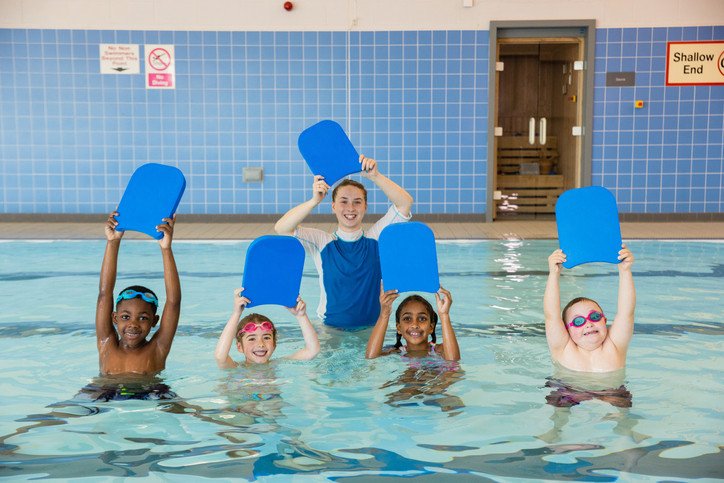
Inflatable toys and water wings are NOT safety devices and can give a false sense of security. Use only US Coast Guard-approved life jackets for safety. For learning, pool noodles and kickboards under close supervision are better tools as they still require the child to work on technique. For more on child safety, see our child health tips.
Never leave children unsupervised near water - not even for a moment. Keep children under 5 within arm's reach. Install a 4-foot fence with self-latching gates around pools. Learn CPR. Use pool alarms. Teach water safety rules. Remember, swimming lessons reduce drowning risk but don't make children "drown-proof."
Most instructors start with floating, kicking, and the freestyle (front crawl) as it's the most natural stroke. Backstroke often comes next as children are already comfortable floating on their backs. Breaststroke and butterfly are more advanced and typically taught to children 6 and older who have mastered basics. For more on physical skills, read our physical development guide.