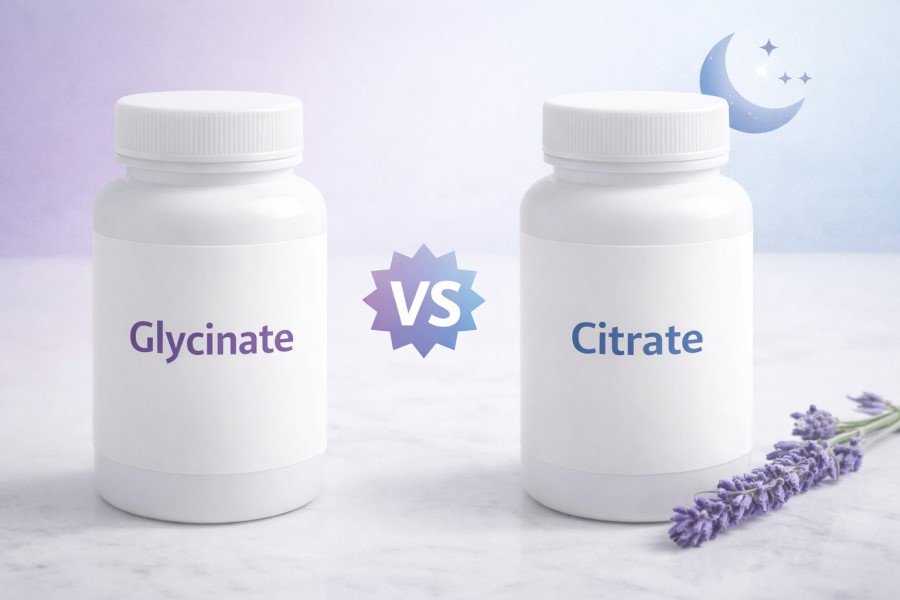
You know you need magnesium for better sleep, but now you're stuck choosing between magnesium glycinate and magnesium citrate. Both are popular, both are well-absorbed, and both show up in every supplement aisle. So which one should you actually buy?
The answer depends on your primary goal. The NIH Office of Dietary Supplements provides detailed information on magnesium forms. This guide breaks down the real differences between glycinate and citrate so you can make a confident choice without wasting money on the wrong form.
Short answer:
Magnesium glycinate is better for sleep and anxiety. Magnesium citrate is better for general supplementation and constipation relief. If you only buy one, choose glycinate  it covers sleep, stress, and general health with fewer side effects. Read our full Magnesium for Sleep Guide for dosage details.
Glycinate vs Citrate at a Glance
Here is a side-by-side comparison of the two most popular magnesium forms:
| Feature | Magnesium Glycinate | Magnesium Citrate |
|---|---|---|
| Best for | Sleep, anxiety, relaxation | General supplementation, constipation |
| Absorption rate | Very high | High |
| Side effects | Minimal | May cause loose stools |
| Stomach gentleness | Very gentle | Moderate |
| Calming effect | Strong (glycine adds calm) | Moderate |
| Price | Higher (£15-25/month) | Lower (£8-15/month) |
| Laxative effect | Rare | Common at higher doses |
| Elemental Mg per capsule | ~14% of total weight | ~16% of total weight |
| Best time to take | Evening / before bed | Morning or anytime |
What Is Magnesium Glycinate?
As explained by Harvard Health, magnesium glycinate is magnesium bonded to glycine, an amino acid that plays an important role in brain function and relaxation. This pairing gives glycinate a unique advantage over other magnesium forms: you get the benefits of magnesium and glycine at the same time.
Key characteristics:
- Highest bioavailability among common magnesium forms  your body absorbs more of what you take
- Glycine is a calming neurotransmitter that promotes relaxation and supports healthy sleep architecture
- Very gentle on digestion  rarely causes stomach upset or loose stools
- Ideal for people who are sensitive to supplements or have a history of digestive issues
Glycinate is the form most frequently recommended by practitioners for sleep and anxiety support. The glycine component has been studied independently for its ability to improve sleep quality by lowering core body temperature and promoting feelings of calm.
What Is Magnesium Citrate?
Magnesium citrate is magnesium bonded to citric acid. It is one of the most widely available and affordable forms of magnesium, found in nearly every pharmacy and supplement shop.
Key characteristics:
- Good absorption rate  not as high as glycinate, but significantly better than oxide
- Widely available and comes in capsules, powders, and liquid forms
- Can have a laxative effect, which is helpful for constipation but problematic if you do not need that benefit
- More affordable than glycinate, making it a popular choice for general magnesium supplementation
Citrate is a solid all-around magnesium supplement. If your primary goal is simply to increase your magnesium intake without a specific focus on sleep or anxiety, citrate is a cost-effective option.
Glycinate vs Citrate for Sleep
When it comes to sleep specifically, glycinate is the clear winner. Here is why:
Glycine promotes deep sleep (NREM sleep). Research suggests that glycine supplementation can improve subjective sleep quality, reduce the time it takes to fall asleep, and increase time spent in slow-wave sleep  the most restorative stage. When you take magnesium glycinate, you are getting glycine as a bonus alongside the magnesium itself.
Glycinate does not disrupt sleep with digestive issues. One of the biggest problems with citrate for nighttime use is the potential laxative effect. Waking up at 3 AM to use the bathroom defeats the purpose of a sleep supplement. Glycinate virtually eliminates this risk.
Citrate still helps if deficiency is the root cause. If your poor sleep is driven by magnesium deficiency (common in women who are stressed, exercising heavily, or not eating enough leafy greens), any well-absorbed form of magnesium will improve your sleep. Citrate can work here, but glycinate does everything citrate does and adds the glycine benefit on top.
Verdict: For sleep, choose glycinate. If you are also struggling with an overactive mind at night, combining glycinate with relaxation techniques can be especially effective. Our guide on how to calm an overactive mind at night covers strategies that pair well with magnesium supplementation.
Glycinate vs Citrate for Anxiety
Anxiety and sleep are closely linked, and magnesium plays a role in both. But the two forms work differently when it comes to calming your nervous system.
Glycine supports GABA regulation. GABA is your brain's primary calming neurotransmitter. When GABA activity is low, you feel anxious, wired, and unable to relax. Glycine  the amino acid in magnesium glycinate  acts as an inhibitory neurotransmitter and supports GABA receptor function. This gives glycinate a direct anti-anxiety mechanism that citrate simply does not have.
Citrate corrects deficiency but lacks direct calming properties. Magnesium deficiency itself can worsen anxiety, and citrate will help address that deficiency. However, citric acid does not have any independent calming effects on the nervous system. You are getting the magnesium benefit only, not a dual benefit.
Verdict: For anxiety, glycinate is the better choice. If you want to understand your current stress levels, take our Stress Level Quiz to see where you stand.
Glycinate vs Citrate for Muscle Cramps
Both forms of magnesium help with muscle relaxation and cramps, but there are some practical differences to consider.
Both address the underlying issue. Muscle cramps are often caused or worsened by low magnesium. Since both glycinate and citrate are well-absorbed, both will raise your magnesium levels and help reduce cramping.
Citrate absorbs slightly faster. Because citric acid enhances absorption speed, citrate may provide quicker relief for acute muscle cramps. If you need fast-acting support after intense exercise, citrate has a slight edge.
For nighttime cramps, glycinate is better. If your muscle cramps happen at night and disrupt your sleep, glycinate gives you the muscle relaxation benefit plus the sleep-promoting effect of glycine. You solve two problems at once without risking digestive disruption.
For daytime cramps: Either form works well. Choose based on your budget and stomach sensitivity.
Side Effects Comparison
Side effects are one of the most important factors when choosing between these two forms. Here is how they compare:
| Side Effect | Glycinate | Citrate |
|---|---|---|
| Diarrhea | Rare | Common at high doses |
| Nausea | Very rare | Occasional |
| Stomach cramps | Very rare | Occasional |
| Drowsiness | Mild (desired at night) | Unlikely |
| Headache | Very rare | Very rare |
The biggest practical difference is digestive tolerance. If you have a sensitive stomach or are prone to loose stools, glycinate is the safer bet. Citrate's laxative effect is dose-dependent  some people tolerate lower doses fine but experience problems at 300mg or above.
Dosage Guide
How much you should take depends on your goal. Here is a practical dosage guide for both forms:
| Goal | Glycinate Dose | Citrate Dose | When to Take |
|---|---|---|---|
| Sleep | 200-400mg | 200-300mg | 30-60 min before bed |
| Anxiety | 200-400mg | 200-300mg | Split AM/PM |
| Muscle cramps | 200-350mg | 200-350mg | Before bed or after exercise |
| General health | 200mg | 200mg | Anytime with food |
Important note about elemental magnesium: The dose listed on a supplement label often refers to the total weight of the magnesium compound, not the amount of actual (elemental) magnesium. For example, a 500mg magnesium glycinate capsule contains only about 70mg of elemental magnesium. A 500mg magnesium citrate capsule contains about 80mg of elemental magnesium. Always check the label for the elemental magnesium content and aim for 200-400mg of elemental magnesium per day from supplements.
Which Should You Choose? (Decision Guide)
Still not sure? Use this simple decision guide:
- Your main goal is better sleep? → Choose Glycinate
- You need constipation relief? → Choose Citrate
- You have a sensitive stomach? → Choose Glycinate
- Your budget is tight? → Choose Citrate
- You want calm + sleep support? → Choose Glycinate
- You want general supplementation? → Either works
For most people reading this article  those looking to sleep better, feel calmer, and reduce nighttime tension  magnesium glycinate is the better choice. The higher cost is offset by better tolerability and the added benefit of glycine.
If budget is a real concern, magnesium citrate is still a good supplement. It is far better than magnesium oxide (which has poor absorption) and will address deficiency-related sleep issues effectively.
What About Other Forms?
Glycinate and citrate are the two most popular forms, but they are not your only options:
- Magnesium L-threonate  specifically designed to cross the blood-brain barrier. Best for cognitive function and brain health. More expensive but promising for age-related cognitive decline.
- Magnesium taurate  magnesium bonded to taurine. Often recommended for heart health and blood pressure support.
- Magnesium oxide  cheap but poorly absorbed (only about 4% bioavailability). Not recommended for sleep or anxiety. Mainly used as a laxative or antacid.
For a complete breakdown of all magnesium types and how they compare, read our full guide: Best Magnesium Supplements for Sleep.
Disclaimer: This article is for educational purposes only and does not constitute medical advice. Always consult with a qualified healthcare professional before starting any supplement, especially if you are pregnant, breastfeeding, taking medications, or have underlying health conditions. Individual needs vary, and what works for one person may not be appropriate for another.
Frequently Asked Questions
Which is better for sleep: glycinate or citrate?
Magnesium glycinate is better for sleep. The glycine component has its own calming effect on the brain, and glycinate is less likely to cause digestive issues that could disrupt sleep. Citrate works for general supplementation but may have a laxative effect.
Can I take glycinate and citrate together?
Yes, some people take both forms. Glycinate at night for sleep and citrate during the day for general magnesium support. However, monitor total elemental magnesium intake and stay below 350mg supplemental per day unless directed by a doctor.
Which magnesium has the least side effects?
Magnesium glycinate has the fewest side effects. It is very gentle on the stomach and rarely causes diarrhea. Citrate is more likely to cause loose stools, especially at higher doses. Oxide has the most digestive side effects.
How much magnesium glycinate should I take for sleep?
200-400mg of magnesium glycinate 30-60 minutes before bed. Start with 200mg and increase if needed. Note that a 500mg magnesium glycinate capsule contains only about 70mg of elemental magnesium.
Is magnesium citrate good for anxiety?
Magnesium citrate can help with general magnesium deficiency which worsens anxiety, but glycinate is preferred for anxiety specifically. The glycine in glycinate has direct calming effects on the nervous system that citrate does not offer.
Why is magnesium glycinate more expensive?
Glycinate requires bonding magnesium to the amino acid glycine, which is a more complex manufacturing process. The higher bioavailability and gentler absorption also make it more in demand. However, you may need fewer capsules due to better absorption, partially offsetting the cost.
Does magnesium citrate keep you awake?
Some people find citrate slightly stimulating due to its effect on energy metabolism. If this happens, take citrate in the morning and switch to glycinate for evening use. Most people do not experience this effect.
How long does it take for magnesium to work for sleep?
Some people notice effects within the first few nights. Full benefits typically build over 1-2 weeks of consistent daily use. Give it at least 2-4 weeks before deciding if it works for you. Glycinate tends to produce noticeable calming effects faster than citrate.