Quick Win: A Spring Snack Kids Actually Ask For
Slice strawberries + banana + drizzle of honey + sprinkle of granola = a spring snack kids actually ask for. For more protein, add a dollop of Greek yoghurt. Takes 2 minutes, zero cooking. Scroll down for 14 more ideas, including no-bake, nut-free, and toddler-safe options.
Spring is here, the days are getting longer, and your kids are hungrier than ever between meals. Whether they are running in from the garden or need something quick for their lunch box, having a stash of healthy, seasonal snacks ready to go makes life so much easier.
The good news? Spring produce is at its best right now. Strawberries are sweet, peas are crisp, and there is no better time to swap out those packaged snacks for something fresh, colourful, and genuinely nutritious. These 15 snack ideas are all parent-tested, kid-approved, and designed to take minimal effort.
Why Seasonal Snacking Matters for Kids
You might be wondering why we keep banging on about seasonal eating. Here is why it genuinely makes a difference for your family:
- Spring produce is fresher, tastier, and more affordable. Fruits and vegetables that are in season have not travelled halfway around the world to reach your plate. They are picked closer to ripeness, which means better flavour and more nutrients. Your wallet will thank you too.
- Seasonal eating teaches kids about where food comes from. When children understand that strawberries belong to spring and pumpkins belong to autumn, they develop a deeper connection with food. This curiosity often leads to more adventurous eating.
- Spring fruits are naturally sweet and can compete with processed snacks. A perfectly ripe strawberry or a juicy mango chunk is nature's sweet treat. When kids get used to these flavours, they are less likely to crave sugar-loaded alternatives.
- Variety prevents nutrient gaps. Rotating your snacks with the seasons naturally introduces a wider range of vitamins, minerals, and antioxidants into your child's diet.
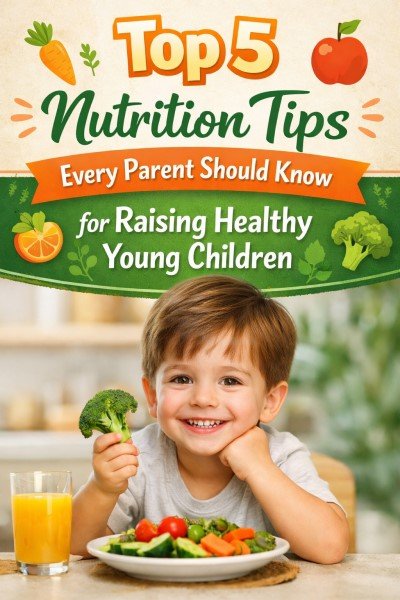
For a deeper dive into building great food habits early, check out our guide on top nutrition tips every parent should know for raising healthy children.
Spring Produce in Season Now
Before we get to the snack ideas, here is a quick reference of what is fresh and available this spring. Use this as your shopping list:
| Fruits | Vegetables | Herbs |
|---|---|---|
| Strawberries | Asparagus | Mint |
| Blueberries | Peas | Basil |
| Cherries | Radishes | Dill |
| Mangoes | Spinach | Parsley |
| Kiwi | Cucumber | Chives |
| Apricots | Carrots (spring) | - |
15 Healthy Spring Snacks Your Kids Will Love
Every snack on this list uses seasonal ingredients, takes minimal time, and has been chosen because kids genuinely enjoy eating them. We have included tags so you can quickly find what works for your child's age and any dietary needs.
1. Strawberry Banana Yoghurt Bites
Ingredients: Greek yoghurt, fresh strawberries, banana slices.
How to make it: Mix mashed strawberries into Greek yoghurt. Spoon small dollops onto a baking sheet lined with parchment paper and press a banana slice into each one. Freeze for at least 2 hours until solid.
Why kids love it: They feel like they are eating ice cream, but it is packed with protein, calcium, and real fruit.
No-bake | Nut-free | Age 2+
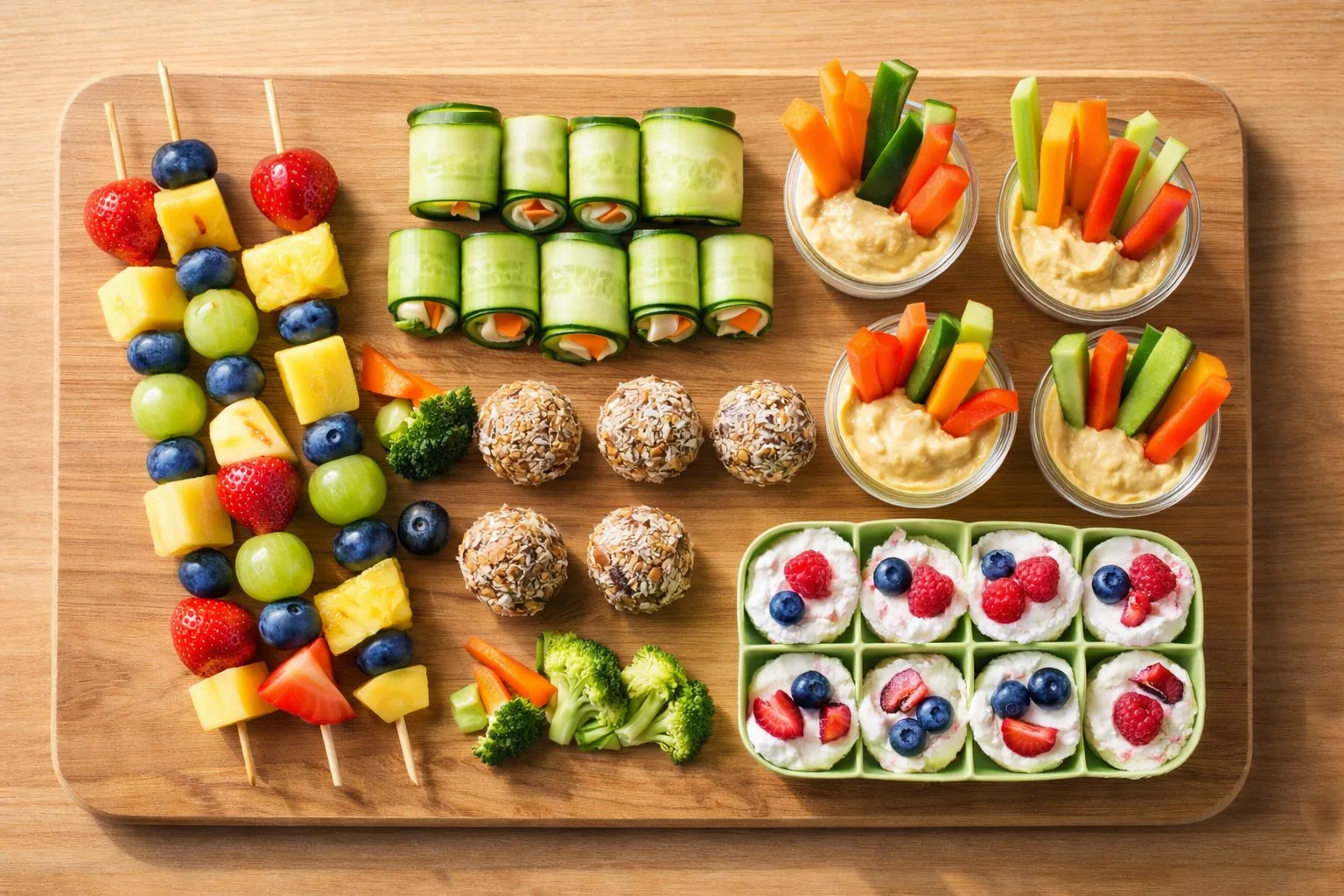
2. Rainbow Fruit Skewers
Ingredients: Strawberries, mango chunks, kiwi slices, blueberries, grapes (halved for toddlers).
How to make it: Thread the fruits onto wooden skewers in rainbow colour order. For younger children, remove the skewer and serve the fruit in a bowl or on a plate in a rainbow line.
Why kids love it: Eating the rainbow becomes literal and fun, and they get to pick their favourite colours first.
No-bake | Nut-free | Age 3+ (remove skewer for younger)
3. Cucumber Cream Cheese Roll-Ups
Ingredients: Cucumber slices (cut lengthways with a peeler or mandoline), cream cheese, thin slices of turkey or ham.
How to make it: Spread a thin layer of cream cheese on each cucumber strip, lay a piece of turkey or ham on top, and roll up tightly. Secure with a toothpick for older kids or cut into bite-sized pieces for little ones.
Why kids love it: Crunchy, creamy, and protein-packed with a satisfying roll-up shape that feels special.
No-cook | Nut-free | Age 2+
4. Ants on a Log (Spring Edition)
Ingredients: Celery sticks, sunflower seed butter, raisins or dried cranberries.
How to make it: Fill the groove of each celery stick with sunflower seed butter and line up raisins or cranberries along the top. Let your kids place the "ants" themselves for extra fun.
Why kids love it: The silly name, the hands-on assembly, and the satisfying crunch-and-chew combination make this a timeless favourite.
No-bake | Nut-free | Age 3+
5. Mini Spinach & Cheese Muffins
Ingredients: Fresh spinach, eggs, grated cheddar cheese, a splash of milk, pinch of salt.
How to make it: Blend a handful of spinach into beaten eggs and milk until smooth (the green disappears into the cheese flavour). Stir in grated cheese, pour into a greased mini muffin tin, and bake at 180C for 12-15 minutes until golden and set.
Why kids love it: They taste like cheesy bites with absolutely no hint of the spinach hiding inside. Sneaky vegetables at their finest.
Nut-free | Freezer-friendly | Age 1+
6. Frozen Berry Smoothie Pops
Ingredients: Mixed berries (strawberries, blueberries, raspberries), Greek yoghurt, a drizzle of honey.
How to make it: Blend the berries, yoghurt, and honey until smooth. Pour into popsicle moulds and freeze for at least 4 hours. For a fun twist, layer the blended mixture with whole berries before freezing.
Why kids love it: A healthy alternative to store-bought ice lollies that tastes every bit as indulgent.
No-cook (after blending) | Nut-free | Age 2+
7. Apple Slices with Sunflower Seed Butter
Ingredients: Crisp apples (any variety), sunflower seed butter.
How to make it: Slice apples into wedges and serve alongside a small bowl of sunflower seed butter for dipping. Squeeze a little lemon juice over the apple slices to prevent browning if packing for lunch boxes.
Why kids love it: Sweet, crunchy, and full of healthy fats. The dipping action makes it feel interactive and fun.
No-cook | Nut-free | Age 2+
8. Spring Garden Veggie Cups
Ingredients: Hummus, carrot sticks, cucumber sticks, celery sticks.
How to make it: Spoon a generous layer of hummus into the bottom of a small clear cup or jar. Stand the vegetable sticks upright in the hummus so they look like little plants growing in a garden.
Why kids love it: It looks like a mini garden they can eat, which makes vegetables feel like a game rather than a chore.
No-cook | Nut-free | Vegan | Age 2+
9. Banana Oat Energy Balls
Ingredients: Ripe bananas, rolled oats, chia seeds, honey.
How to make it: Mash 2 ripe bananas in a bowl. Stir in 1 cup of oats, 1 tablespoon of chia seeds, and a drizzle of honey. Roll the mixture into small balls (you should get about 20) and place on a lined tray. Refrigerate for at least 30 minutes until firm.
Why kids love it: They are sweet, chewy, and perfectly bite-sized. Prep 20 in 10 minutes and they last all week in the fridge.
No-bake | Nut-free option | Age 2+
10. Watermelon Pizza
Ingredients: A thick round slice of watermelon, Greek yoghurt, mixed berries, granola.
How to make it: Place a round watermelon slice on a plate as your "pizza base." Spread a thin layer of Greek yoghurt on top, scatter with berries and a sprinkle of granola, then cut into triangular slices.
Why kids love it: Kids love eating pizza, even when it is made of fruit. The presentation alone gets them excited.
No-cook | Nut-free | Age 2+
11. Cheese & Whole Grain Crackers with Grapes
Ingredients: Mild cheddar or mozzarella cheese cubes, whole grain crackers, grapes (halved for toddlers).
How to make it: Cube the cheese, arrange on a plate alongside crackers and halved grapes. That is it. Sometimes the simplest snacks are the best ones.
Why kids love it: Simple, balanced, and lunch box ready. The combination of textures keeps little hands busy.
No-cook | Nut-free | Age 2+
12. Mango Lassi Cups
Ingredients: Ripe mango (fresh or frozen), Greek yoghurt, a tiny dash of cardamom.
How to make it: Blend the mango and yoghurt together until smooth and creamy. Add just a pinch of cardamom for warmth. Pour into small cups or reusable pouches for on-the-go snacking.
Why kids love it: Creamy, naturally sweet, and packed with probiotics. It tastes like a dessert but is full of goodness.
No-cook | Nut-free | Age 1+
13. Homemade Trail Mix (Nut-Free)
Ingredients: Sunflower seeds, pumpkin seeds, dried cranberries, dark chocolate chips, cereal (such as Cheerios or puffed rice).
How to make it: Toss all ingredients together in a bowl. Portion into small bags or containers for the week ahead. Let your kids pick their own mix-ins from a selection to make it feel personalised.
Why kids love it: Completely customisable for every taste, and the chocolate chips make it feel like a treat.
No-bake | Nut-free | Age 3+
14. Sweet Potato Toast Fingers
Ingredients: Sweet potato, mashed avocado or cream cheese for topping.
How to make it: Slice a sweet potato lengthways into thin slabs (about 5mm thick). Pop them in the toaster on a high setting 2-3 times until firm and lightly golden, or bake at 200C for 15 minutes. Top with mashed avocado or cream cheese.
Why kids love it: A whole food alternative to bread toast that is naturally sweet and easy to hold with little fingers.
Nut-free | Vegan option | Age 1+
15. Strawberry Caprese Bites
Ingredients: Fresh strawberries (halved), mini mozzarella balls (bocconcini), fresh basil leaves, balsamic glaze.
How to make it: Place a halved strawberry on a plate, top with a mini mozzarella ball and a small basil leaf. Drizzle lightly with balsamic glaze. For older kids, thread them onto toothpicks for easy eating.
Why kids love it: Surprisingly delicious, fancy-looking, and the sweet-savoury combination is something most kids find irresistible once they try it.
No-cook | Nut-free | Age 3+
Snack Nutrition at a Glance
Wondering which snacks pack the most nutritional punch? Here is a quick comparison of the most popular options from this list:
| Snack | Calories (approx) | Protein | Best For |
|---|---|---|---|
| Yoghurt Bites | 60 | 3g | Hot days, teething toddlers |
| Fruit Skewers | 80 | 1g | Parties, lunch boxes |
| Cucumber Roll-Ups | 70 | 5g | Protein boost, picky eaters |
| Spinach Muffins | 90 | 6g | Hiding vegetables |
| Energy Balls | 100 | 3g | After-school energy |
| Veggie Cups | 85 | 3g | Getting kids to eat veggies |
| Watermelon Pizza | 110 | 4g | Fun presentation |
| Mango Lassi Cups | 95 | 4g | Probiotics, smooth texture |
Tips for Picky Eaters
If your child turns their nose up at anything that is not a plain cracker, you are not alone. Picky eating is one of the most common challenges parents face, and it is completely normal. Here are some strategies that genuinely help:
- Let them choose between 2 options, not unlimited choice. Asking "Would you like apple slices or cucumber sticks?" is far more effective than "What do you want to eat?" Too many options overwhelm small children.
- Involve kids in preparation. Children who help make their snacks are significantly more likely to eat them. Even toddlers can wash fruit, stir yoghurt, or press raisins onto celery.
- Use cookie cutters for fun shapes. A star-shaped watermelon slice is somehow more appealing than a regular one. It sounds silly, but it works remarkably well.
- Do not force it. Offer without pressure and repeat exposure. Research shows it can take 10-15 exposures before a child accepts a new food. Keep offering, keep it casual, and never turn it into a battle.
- Make it visual and colourful. Kids eat with their eyes first. A plate with five different colours is more exciting than a plate of beige.
- Pair new foods with familiar favourites. Serving something new alongside something they already love takes the pressure off and creates a safety net.
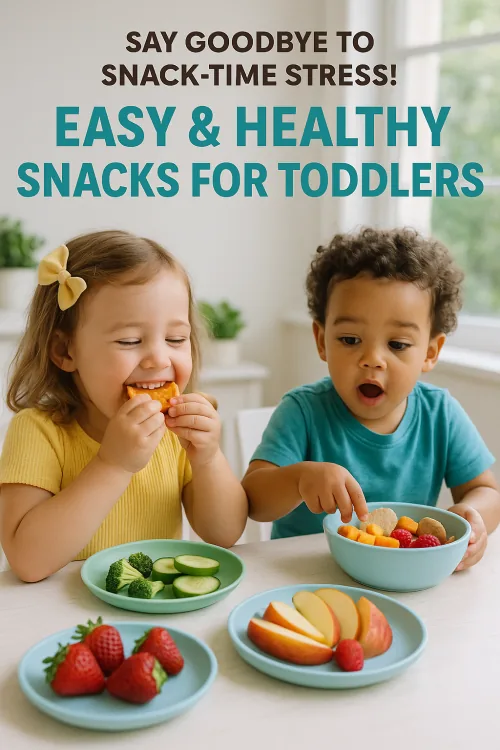
For more ideas on winning over reluctant eaters, read our full guide: 5 healthy fun snacks your toddler will actually eat.
Meal Prep Sunday: Snack Prep in 30 Minutes
The secret to consistently offering healthy snacks is not willpower or cooking skills. It is preparation. Spend just 30 minutes on a Sunday and you will have a fridge full of ready-to-grab options for the entire week.
Step 1: Wash and Cut All Fruits (10 minutes)
Wash strawberries, blueberries, grapes, and any other fruit you have bought. Halve grapes for toddlers. Slice apples and store in water with a squeeze of lemon to prevent browning. Cube melon and mango. Store everything in clear containers in the fridge.
Step 2: Make Energy Balls (10 minutes)
Follow the banana oat energy ball recipe above. Mash, mix, roll, and refrigerate. You will have 20 balls that are ready to grab all week. If you have extra time, make a batch of spinach muffins too and freeze half.
Step 3: Prep Veggie Cups and Hummus Containers (5 minutes)
Cut carrot sticks, cucumber sticks, and celery sticks. Stand them upright in small containers with a layer of hummus at the bottom. These look great and are ready for lunch boxes or after-school snacking.
Step 4: Portion Cheese and Crackers into Bags (5 minutes)
Cube cheese, count out crackers, and halve grapes. Pop each portion into a small bag or container. Label if you like, but the key is that anyone in the family can just grab one and go.
Storage Tips
- Cut fruit: 3-4 days in the fridge in airtight containers
- Energy balls: 5 days in the fridge, 2 months in the freezer
- Spinach muffins: 3 days in the fridge, 3 months in the freezer
- Veggie cups with hummus: 4-5 days in the fridge
- Yoghurt bites: 2 months in the freezer
- Smoothie pops: 2-3 months in the freezer
Allergy-Friendly Guide
Every family has different dietary needs, and we have made sure this list covers as many as possible. Here is a quick reference so you can find safe options at a glance:
| Allergy | Safe Snacks From This List |
|---|---|
| Nut-free | All 15 snacks (no tree nuts used in any recipe) |
| Dairy-free | Fruit Skewers, Ants on a Log, Energy Balls, Veggie Cups, Trail Mix, Sweet Potato Toast |
| Egg-free | All except Spinach Muffins |
| Gluten-free | Fruit Skewers, Yoghurt Bites, Smoothie Pops, Veggie Cups, Mango Lassi, Caprese Bites |
More Spring Wellness for Your Family
- Spring Self-Care Routine  a 7-day mind and body reset for busy moms
- 30-Day Spring Wellness Challenge  daily wellness tasks with a free printable checklist
- Spring Morning Routine for Energy  start your day with more energy and mental clarity
- 4-Week Spring Fitness Plan  beginner-friendly home workouts while kids nap
Disclaimer: The information in this article is for general guidance only and is not a substitute for professional medical or nutritional advice. Every child is different. If your child has food allergies, intolerances, or specific dietary needs, please consult your paediatrician or a registered dietitian before introducing new foods. Always supervise young children while eating.
Frequently Asked Questions
What are the healthiest snacks for kids?
The healthiest snacks combine protein, fibre, and healthy fats to keep kids satisfied. Top choices include fruit with nut butter, yoghurt with berries, vegetable sticks with hummus, cheese with whole grain crackers, and homemade energy balls. Avoid snacks high in added sugar, artificial colours, and empty calories.
How many snacks should a child have per day?
Most children need 2-3 snacks per day between meals. Toddlers (1-3 years) may need a snack every 2-3 hours due to small stomachs. School-age children (4-12) typically need a mid-morning and mid-afternoon snack. Space snacks at least 1.5-2 hours before meals so they do not interfere with appetite.
What spring fruits are best for kids?
Spring fruits that kids love include strawberries, blueberries, raspberries, cherries, mangoes, and kiwi. These are naturally sweet, packed with vitamins C and antioxidants, and easy to eat as finger food. Buy seasonal and local when possible for the best flavour and nutrition.
How do I get picky eaters to try healthy snacks?
Presentation matters. Cut food into fun shapes, use cookie cutters, arrange items as faces or animals on the plate, and let kids help prepare the snack. Offer new foods alongside familiar favourites without pressure. It can take 10-15 exposures before a child accepts a new food. Never force them to eat.
Are dried fruits healthy for kids?
Dried fruits contain concentrated nutrients and natural sugars, making them a better choice than sweets. However, they are sticky and can contribute to tooth decay, and the sugar content is higher per bite than fresh fruit. Limit portions to 1-2 tablespoons and pair with water. Choose varieties without added sugar or sulphites.
What are good nut-free snacks for school?
Nut-free school snacks include: sunflower seed butter with apple slices, yoghurt tubes, cheese and crackers, vegetable sticks with hummus, popcorn, rice cakes with cream cheese, fruit skewers, and homemade muffins made with seeds instead of nuts.
Can toddlers eat all of these snacks?
Most snacks in this guide are suitable for toddlers aged 2 and above. For children under 2, avoid whole grapes (cut lengthways), whole nuts, large chunks of raw carrot, and popcorn as these are choking hazards. Always supervise young children while eating and cut food into appropriate sizes.
How do I meal prep snacks for the week?
Spend 30 minutes on Sunday preparing: wash and cut fruits and vegetables into containers, make a batch of energy balls or muffins, portion yoghurt into small jars, and prepare hummus or dips. Store in the fridge in clear containers so kids can see and choose their snacks. Most prepped snacks last 4-5 days.