How much water should you actually drink each day? Forget the generic "8 glasses a day" advice. Your ideal water intake depends on your body weight, and the formula is surprisingly simple.
In this guide, you'll find easy-to-use water intake charts by weight in both kilograms and pounds, plus practical adjustments for exercise, climate, and weight loss goals. Whether you weigh 50 kg or 100 kg, you'll know your exact daily target by the end of this page.
Your weight (kg) × 35 ml = daily water intake.
Example: 65 kg × 35 = 2,275 ml (about 2.3 liters).
Want a more personalised number? Use our Water Intake Calculator — it factors in your activity level, climate, and weight loss goals.
The Simple Formula: Water Intake by Body Weight
There are two easy formulas depending on whether you use metric or imperial measurements:
Metric Formula
Your weight (kg) × 35 ml = daily water intake in ml
Imperial Formula
Your weight (lbs) × 0.5 = daily water intake in oz
Both formulas give you a baseline amount. You'll need to add more if you exercise, live in a hot climate, or have specific health goals. We'll cover those adjustments below.
Worked Examples
- 55 kg (121 lbs): 55 × 35 = 1,925 ml (about 1.9 liters or 65 oz). That's roughly 8 glasses of water per day.
- 75 kg (165 lbs): 75 × 35 = 2,625 ml (about 2.6 liters or 89 oz). That's roughly 11 glasses per day.
- 95 kg (209 lbs): 95 × 35 = 3,325 ml (about 3.3 liters or 112 oz). That's roughly 13 glasses per day.
Don't want to do the maths? Our Water Intake Calculator does it for you instantly, with personalised adjustments built in.
Water Intake Chart by Weight (kg)
This chart uses the 35 ml per kg formula. Find your weight (or the closest match) to see your recommended daily water intake at a glance.
| Weight (kg) | Daily Water (Liters) | Daily Water (ml) | Glasses (250 ml) | Bottles (500 ml) |
|---|---|---|---|---|
| 45 kg | 1.6 L | 1,575 ml | 6 | 3 |
| 50 kg | 1.8 L | 1,750 ml | 7 | 3.5 |
| 55 kg | 1.9 L | 1,925 ml | 8 | 4 |
| 60 kg | 2.1 L | 2,100 ml | 8 | 4 |
| 65 kg | 2.3 L | 2,275 ml | 9 | 4.5 |
| 70 kg | 2.5 L | 2,450 ml | 10 | 5 |
| 75 kg | 2.6 L | 2,625 ml | 11 | 5 |
| 80 kg | 2.8 L | 2,800 ml | 11 | 5.5 |
| 85 kg | 3.0 L | 2,975 ml | 12 | 6 |
| 90 kg | 3.2 L | 3,150 ml | 13 | 6 |
| 95 kg | 3.3 L | 3,325 ml | 13 | 6.5 |
| 100 kg | 3.5 L | 3,500 ml | 14 | 7 |
Water Intake Chart by Weight (lbs)
Prefer imperial measurements? This chart uses the half your body weight in ounces formula. Find your weight below for your daily water target.
| Weight (lbs) | Daily Water (oz) | Daily Water (cups) | Bottles (16.9 oz) |
|---|---|---|---|
| 100 lbs | 50 oz | 6 cups | 3 |
| 110 lbs | 55 oz | 7 cups | 3 |
| 120 lbs | 60 oz | 8 cups | 4 |
| 130 lbs | 65 oz | 8 cups | 4 |
| 140 lbs | 70 oz | 9 cups | 4 |
| 150 lbs | 75 oz | 9 cups | 4.5 |
| 160 lbs | 80 oz | 10 cups | 5 |
| 170 lbs | 85 oz | 11 cups | 5 |
| 180 lbs | 90 oz | 11 cups | 5 |
| 190 lbs | 95 oz | 12 cups | 6 |
| 200 lbs | 100 oz | 13 cups | 6 |
| 220 lbs | 110 oz | 14 cups | 7 |
Adjusting Water Intake for Your Lifestyle
The charts above give you a baseline. Your actual needs may be higher depending on your lifestyle, environment, and health status. Use the table below to adjust your target.
| Factor | Adjustment | Example |
|---|---|---|
| Exercise (moderate, 30 min) | +500 ml | 2.5L → 3.0L |
| Exercise (intense, 60 min) | +750–1000 ml | 2.5L → 3.25–3.5L |
| Hot/humid climate | +500–750 ml | 2.5L → 3.0–3.25L |
| High altitude | +500 ml | |
| Pregnancy | +300 ml | |
| Breastfeeding | +500–700 ml | |
| Weight loss goal | +500 ml | |
| Illness/fever | +500–1000 ml |
For example, if you weigh 70 kg (baseline 2.5L) and you do a 30-minute jog in summer heat, your adjusted target would be: 2.5L + 500 ml (exercise) + 500 ml (hot climate) = 3.5 liters for that day.
Water Intake for Weight Loss
If you're trying to lose weight, water is one of the simplest and most effective tools you can add to your routine. Here's what the research shows:
Water Before Meals Reduces Calorie Intake
A study published in the journal Obesity found that drinking 500 ml of water 30 minutes before meals reduced calorie intake by approximately 13%. Over weeks and months, that adds up significantly.
Water Boosts Your Metabolism
Drinking water temporarily increases your metabolic rate by 24–30% for about an hour after consumption. Cold water may have a slightly greater effect as your body uses energy to warm it to body temperature.
Replace Sugary Drinks
Swapping one sugary drink per day with water can cut 200–500 calories daily. Over a week, that's 1,400–3,500 fewer calories without changing anything else about your diet.
Weight Loss Water Chart
The table below shows your baseline water intake plus the recommended +500 ml for active weight loss support.
| Weight (kg) | Baseline (L) | Weight Loss Target (L) | Glasses (250 ml) |
|---|---|---|---|
| 50 kg | 1.8 L | 2.3 L | 9 |
| 60 kg | 2.1 L | 2.6 L | 10 |
| 70 kg | 2.5 L | 3.0 L | 12 |
| 80 kg | 2.8 L | 3.3 L | 13 |
| 90 kg | 3.2 L | 3.7 L | 15 |
| 100 kg | 3.5 L | 4.0 L | 16 |
Remember: water supports weight loss but won't cause it alone. You still need a calorie deficit. Use our Calorie Calculator to find your ideal daily calorie target, and check out our full guide on water and weight loss for more strategies.
Signs You're Not Drinking Enough Water
Your body gives you clear signals when it needs more water. Watch out for these common signs of dehydration:
- Dark yellow or amber urine (healthy urine is pale straw yellow)
- Persistent thirst or dry mouth
- Fatigue and low energy, especially in the afternoon
- Headaches that improve after drinking water
- Dry, flaky skin or chapped lips
- Dizziness when standing up quickly
- Difficulty concentrating or brain fog
- Constipation or infrequent bowel movements
- Muscle cramps, especially during or after exercise
Even mild dehydration of just 1–2% of your body weight can impair physical performance and mental focus. For a deeper look at dehydration warning signs, read our guide on signs you're not drinking enough water.
How to Drink More Water (Practical Tips)
Knowing your target is one thing. Actually hitting it every day is another. Here are proven strategies that make staying hydrated effortless:
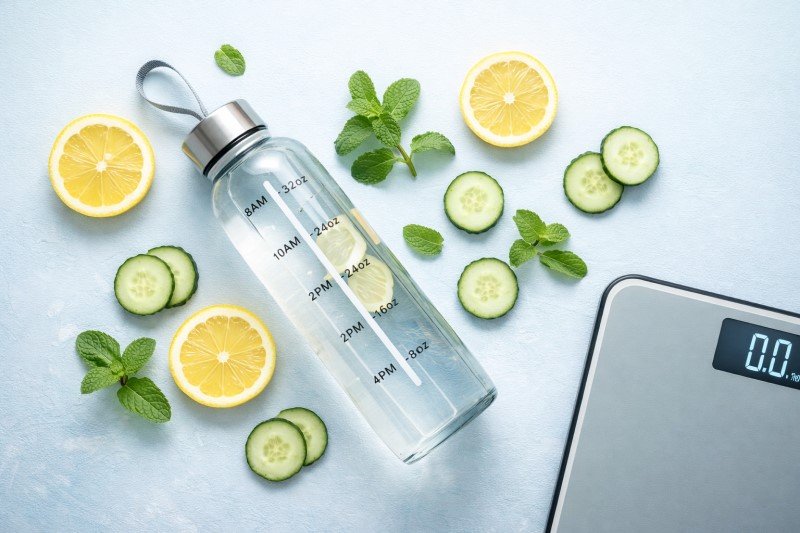
- Carry a water bottle everywhere. A visible bottle is a constant reminder. Choose one with volume markings so you can track your intake throughout the day.
- Set reminders every 2 hours. Use your phone or a hydration app to prompt you to drink. After a few weeks, it becomes a habit.
- Drink a glass before each meal. This simple habit adds 3 glasses (750 ml) to your daily intake automatically, and it may help you eat less too.
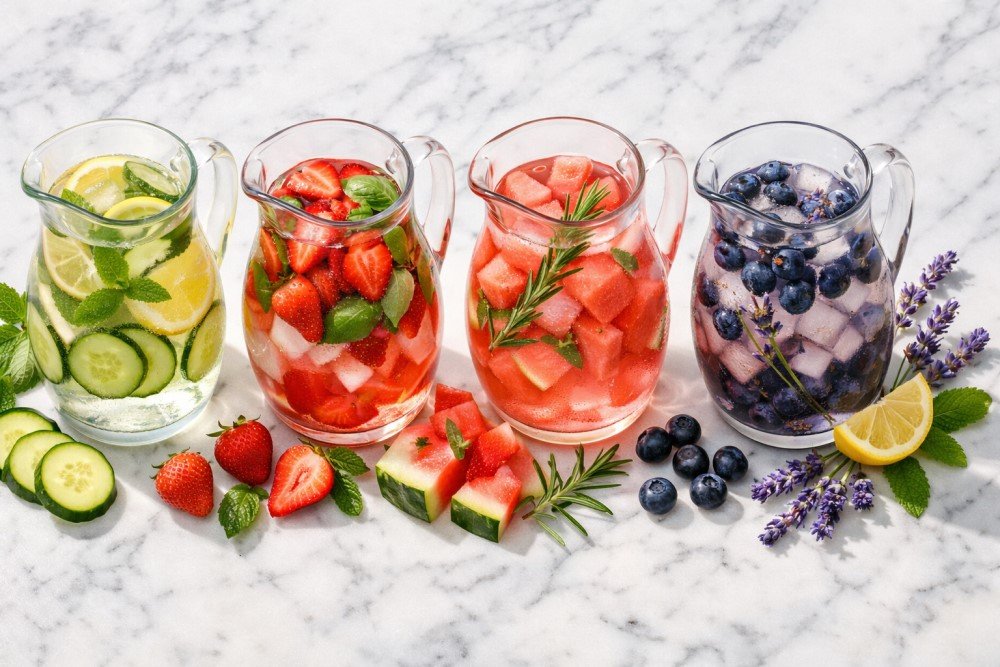
- Infuse with fruit for flavour. Plain water gets boring. Add slices of lemon, cucumber, mint, or berries to make it enjoyable. Check out our spring detox water recipes for delicious ideas.
- Track intake with an app or journal. What gets measured gets managed. Even a simple tally on a sticky note works.
- Eat water-rich foods. You don't have to drink all your water. Cucumber is 96% water, watermelon is 92%, lettuce is 95%, and strawberries are 91%. These all count towards your daily total.
The Urine Colour Guide
Your urine colour is the quickest and most reliable way to check your hydration status. Here's what each shade means:
- Clear / very pale: You may be over-hydrated. Slightly reduce your intake — drinking too much can dilute your electrolytes.
- Pale straw yellow: Perfect hydration. You're right on target. Keep doing what you're doing.
- Yellow: Mildly dehydrated. Drink a glass of water now and aim to drink more consistently throughout the day.
- Dark yellow / amber: Dehydrated. Drink 500 ml of water now and increase your intake for the rest of the day.
- Brown: Severely dehydrated. Drink water immediately and see a doctor if this colour persists, as it can also indicate other health issues.
Note: Certain vitamins (especially B vitamins) and medications can temporarily change urine colour. If you've recently taken a supplement, wait a few hours before using urine colour as a hydration indicator.
Frequently Asked Questions
How much water should I drink for my weight in kg?
Multiply your weight in kg by 35 ml. For example, if you weigh 70 kg: 70 × 35 = 2,450 ml (about 2.5 liters per day). Increase by 500–750 ml if you exercise, live in a hot climate, or are breastfeeding.
How much water should a 70 kg person drink?
A 70 kg person should drink approximately 2.5 liters (about 10 cups or 84 oz) of water per day at baseline. Add 500 ml for every 30 minutes of exercise and extra in hot weather.
Does drinking more water help you lose weight?
Yes. Studies show drinking 500 ml of water before meals reduces calorie intake by 13%. Water boosts metabolism by 24–30% for about an hour after drinking. Replacing sugary drinks with water cuts hundreds of daily calories. However, water alone won't cause weight loss without a calorie deficit.
Can you drink too much water?
Yes, though it's rare. Drinking excessive amounts (over 1 liter per hour consistently) can cause hyponatremia, where sodium levels drop dangerously low. Stick to the weight-based guidelines and drink when thirsty. Your urine should be pale yellow, not completely clear.
Does coffee count towards water intake?
Yes, moderate coffee intake (2–3 cups) counts towards daily hydration. While caffeine is a mild diuretic, the water in coffee more than offsets the fluid loss. However, pure water should still make up the majority of your intake.
How do I know if I'm drinking enough water?
Check your urine colour: pale straw yellow means well-hydrated, dark yellow means drink more. Other signs of adequate hydration: you rarely feel thirsty, your skin bounces back when pinched, and you urinate every 2–3 hours.
Should I drink more water in summer?
Yes. Increase your baseline intake by 500 ml–1 liter in hot weather or humid conditions. If you sweat heavily, you may need even more. Signs you need extra water: darker urine, headaches, fatigue, and dry lips.
How much water should I drink to lose weight?
Follow the weight-based formula (35 ml per kg) plus an additional 500 ml for weight loss support. Drink 500 ml 30 minutes before each meal to reduce appetite. Total for a 70 kg person targeting weight loss: approximately 3 liters per day.